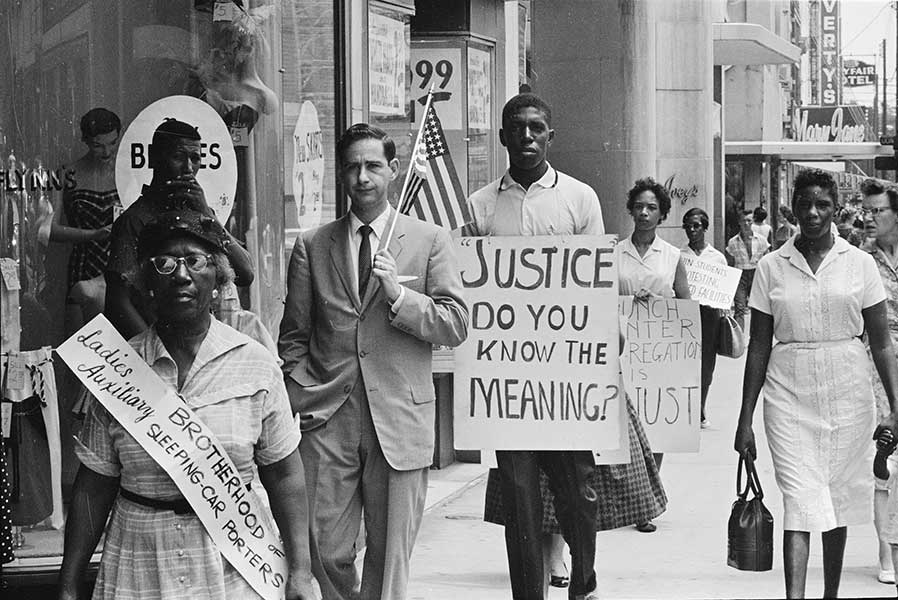
Don Sturkey, Negroes and a few whites picket Charlotte department stores, elderly woman wearing a sash, Charlotte, North Carolina, 1960; photograph, 9 x 13 3/8 inches; Courtesy of Don Sturkey Photographic Materials #P0070, North Carolina Collection, University of North Carolina at Chapel Hill Library.
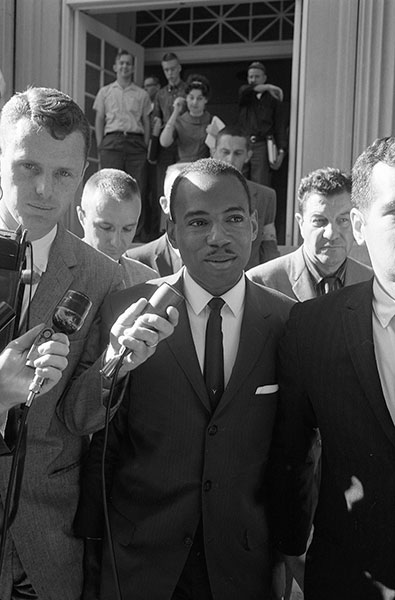
Art Shay, James Meredith being interviewed, Oxford, Mississippi, 1962; photograph, 10 x 6 ½ inches; © 2019 Art Shay Archive Projects llc.
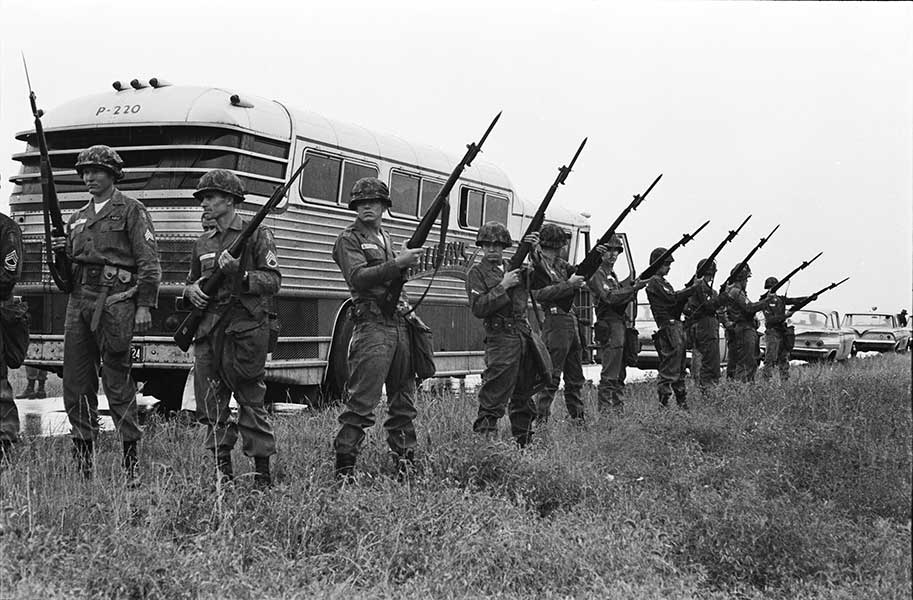
Norman Dean, National Guard members protecting the bus for the Freedom Riders leaving Montgomery, Alabama, for Jackson, Mississippi, Montgomery, Alabama, 1961; photograph, 13 x 17 5/8 inches; Courtesy Alabama Department of Archives and History. Donated by Alabama Media Group/Norman Dean.
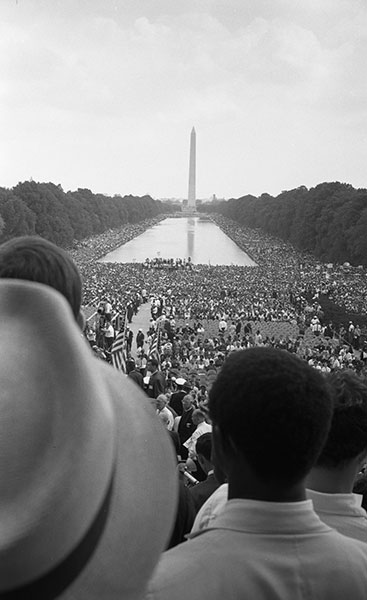
Warren Leffler, Civil rights march on Washington, D.C., view from Lincoln Memorial towards Washington Monument, Washington D.C., 1963; photograph, 18 x 11 inches; Public Domain.
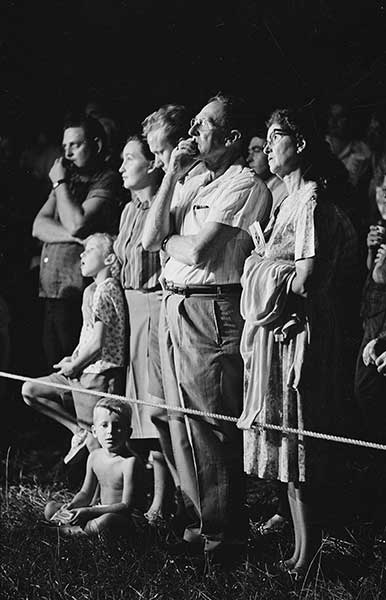
Don Sturkey, Huge Ku Klux Klan rally in Salisbury, small boy looks into the camera, Salisbury, North Carolina, 1964; photograph, 12 x 7 7/8 inches; Courtesy of Don Sturkey Photographic Materials #P0070, North Carolina Collection, University of North Carolina at Chapel Hill Library.
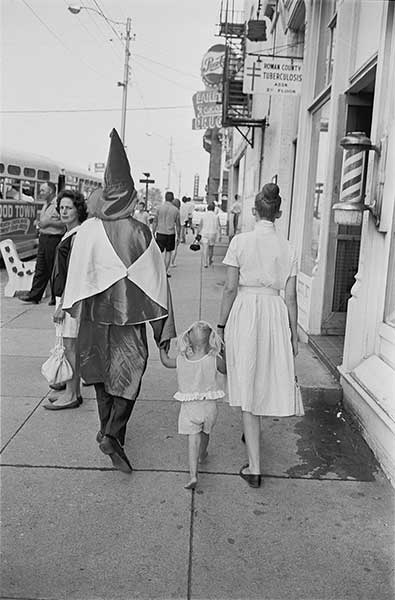
Don Sturkey, Huge Ku Klux Klan rally in Salisbury, Klan member in robes walks down the street with wife and daughter, Salisbury, North Carolina, 1964; photograph, 9 x 5 15/16 inches; Courtesy of Don Sturkey Photographic Materials #P0070, North Carolina Collection, University of North Carolina at Chapel Hill Library.
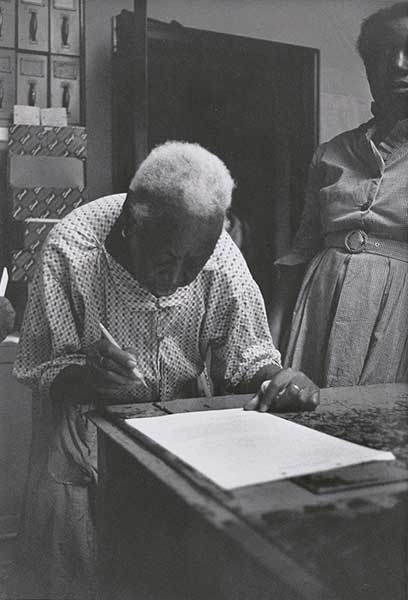
Bruce Hilton, 105-year-old woman (former slave) registers to vote in Greenville, Mississippi, 1965; photograph, 11 x 9 inches; Courtesy Robert Langmuir African American Photograph Collection, Stuart A. Rose Manuscript Archives and Rare Book Library, Emory University.
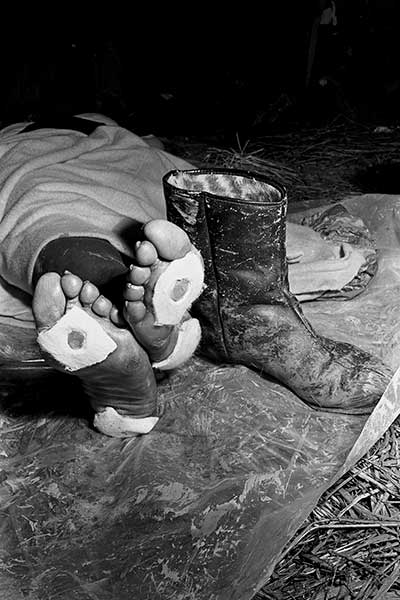
Spider Martin, A marcher’s blistered feet bear witness to the grueling nature of the 54-mile march from Selma to Montgomery, Montgomery, Alabama, 1965: photograph, 8 3/4 x 5 7/8 inches; © Courtesy James “Spider” Martin Photographic Archive, Briscoe Center for American History, University of Texas at Austin.
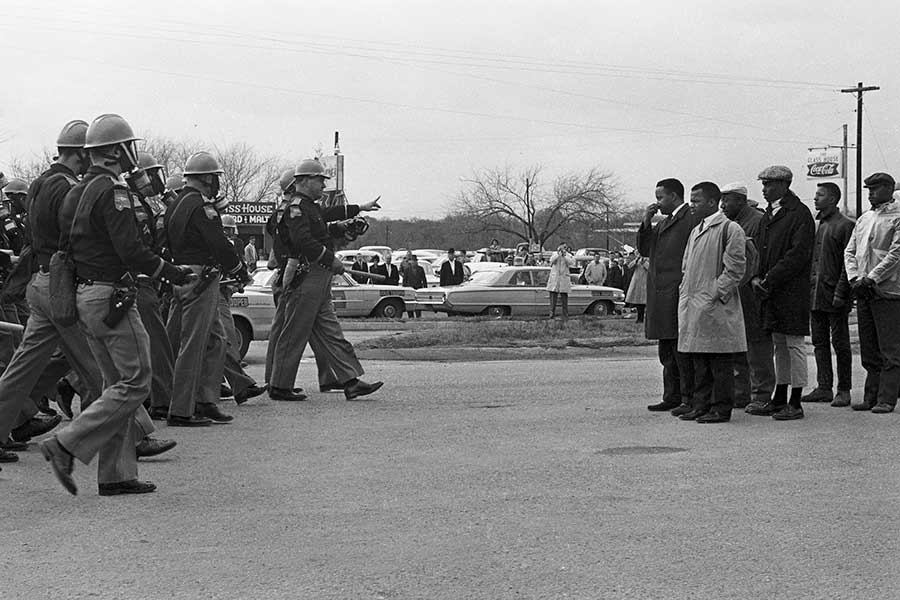
Spider Martin, Rev. Hosea Williams, John Lewis, and others in the March for Voting Rights to Montgomery confronted by Alabama state troopers, Selma, Alabama, 1965; photograph, 13 x 19 ½ inches; © Courtesy James “Spider” Martin Photographic Archive, Briscoe Center for American History, University of Texas at Austin.
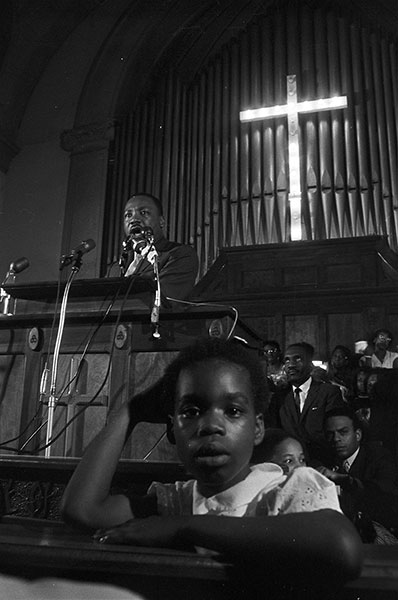
Jim Peppler, Martin Luther King, Jr., speaking to an audience at Brown Chapel in Selma, Alabama, Selma, Alabama, 1966; photograph, 13 x 8 5/8 inches; Courtesy Alabama Department of Archives and History.
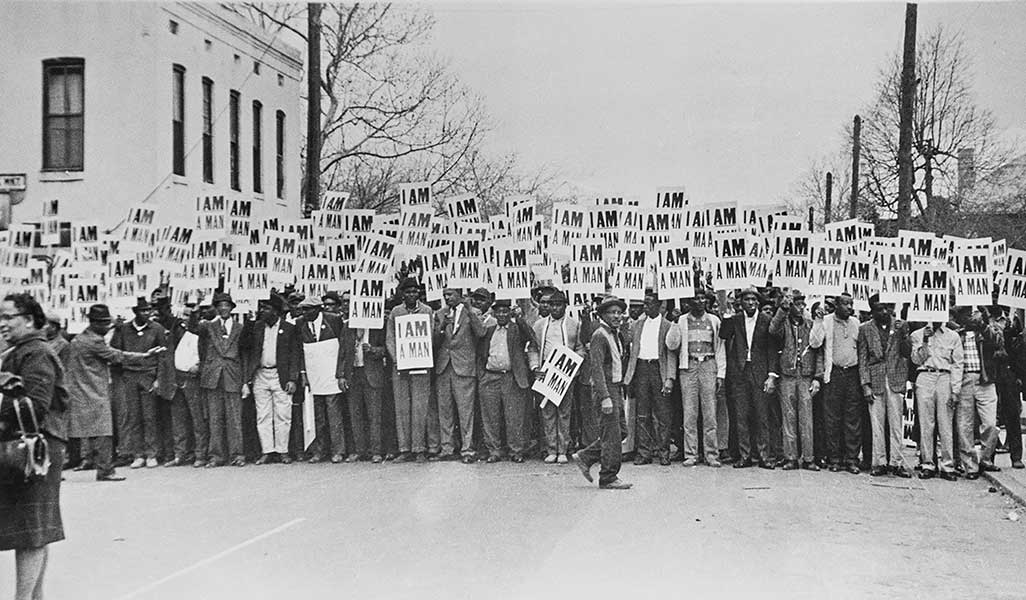
Ernest Withers, Sanitation workers assemble in front of Clayborn Temple for a solidarity march. I Am A Man was the theme for Community On the Move for Equality (C.O.M.E.),1968; photograph, dimensions variable; © Ernest Withers, Courtesy Withers Family Trust.
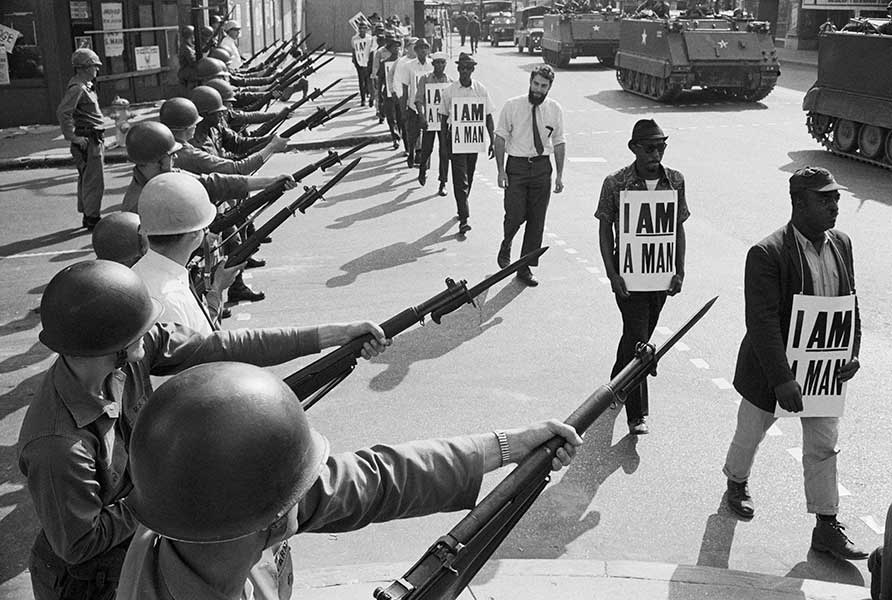
Unknown, U.S. National Guard troops block off Beale Street as Civil Rights marchers wearing placards reading I AM A MAN pass by on March 29, 1968, Memphis, Tennessee, March 29, 1968; photograph, 12 x 18 inches; Courtesy Getty Images.
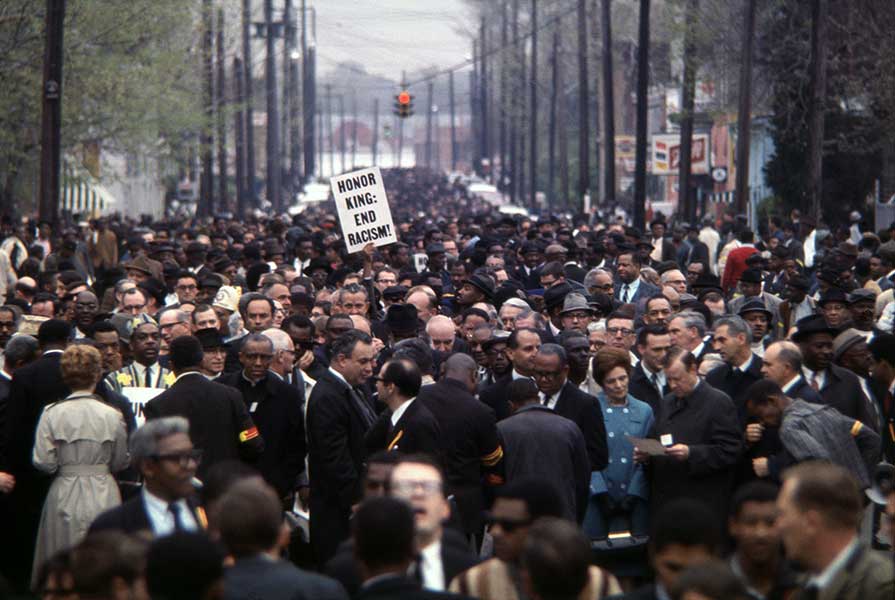
Don Sturkey, Negroes and a few whites picket Charlotte department stores, elderly woman wearing a sash, Charlotte, North Carolina, 1960; photograph, 9 x 13 3/8 inches; Courtesy of Don Sturkey Photographic Materials #P0070, North Carolina Collection, University of North Carolina at Chapel Hill Library.
I AM A MAN: Photographs of the Civil Rights Movement, 1960–1970
Thousands of courageous people risked their lives to end Jim Crow segregation, and photographs were made by both amateurs and professionals in the midst of often-dangerous confrontations. Renowned Southern folklorist, author, and curator William Ferris examines the power of these images to motivate change.
The 1960–1970 decade was a momentous time for the civil rights movement in the American South. It was an historic decade that unleashed both hope for the future and profound change as public spaces were desegregated and as African Americans secured their right to vote.
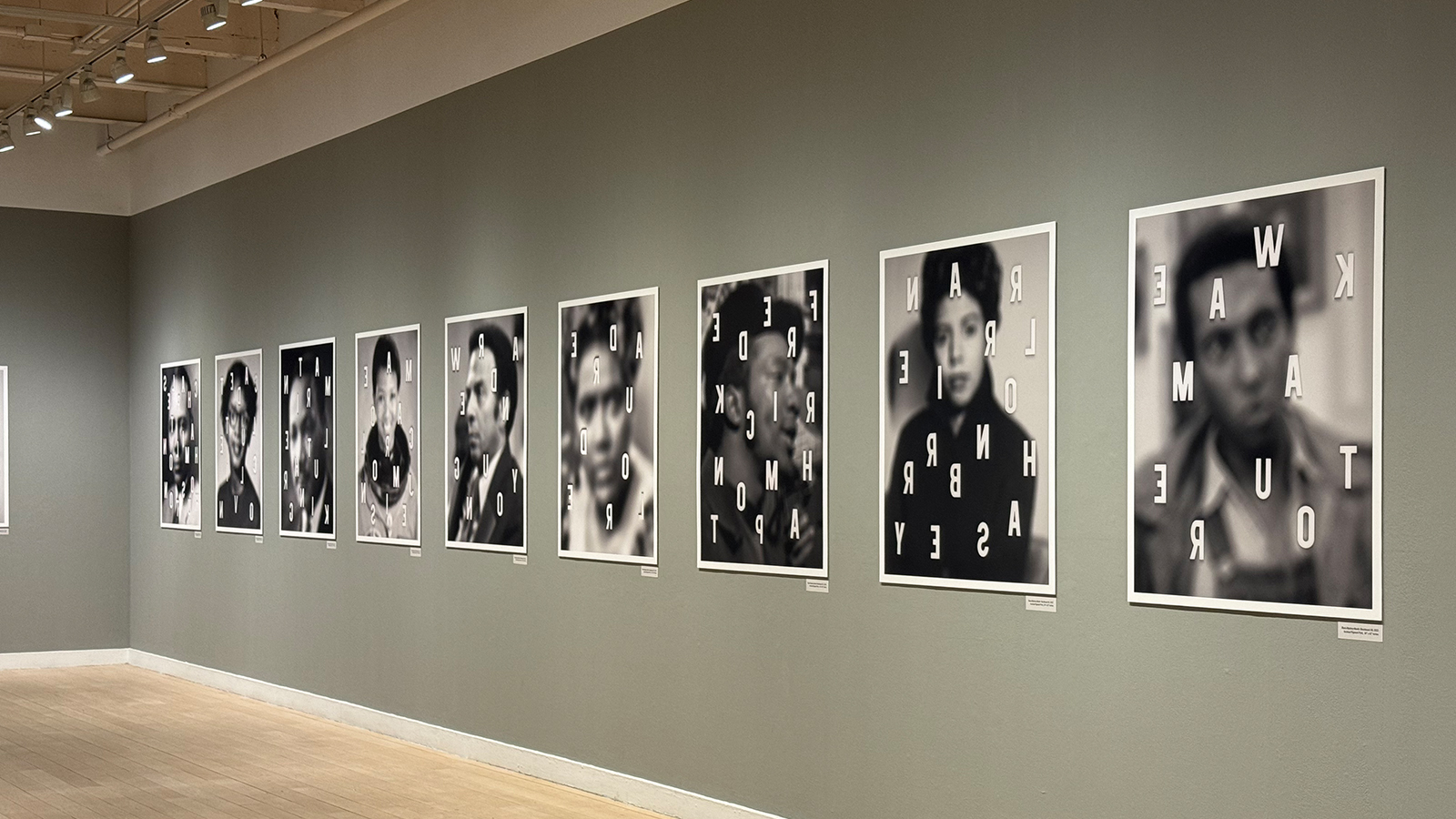
I AM A MAN: Photographs of the Civil Rights Movement, 1960–1970 displays a wide range of photographs taken by amateurs, local photojournalists, and internationally known photographers. Together, they provide a vivid visual story of the evolution of the civil rights movement and shed light on the movement’s integration in the daily living in the American South.
Inspired by the voice of Reverend Martin Luther King, Jr., thousands of courageous people risked their lives to end Jim Crow segregation, and photographs were made in the midst of often-dangerous confrontations. The exhibition takes its name, “I AM A MAN” from the slogan of the sanitation workers’ strike Martin Luther King, Jr., was supposed to lead the day after he was assassinated fifty years ago. Dr. King and other civil rights leaders relied on the power of photographs to persuade and to motivate change during the civil rights movement.
Southern folklorist, author, and curator William Ferris and his research team sought out photos taken in the heat of the civil rights movement, by activists or local news photographers, who documented history taking place before their eyes.
Exhibition Details
47 photographs plus a film and a small amount of ephemera
- Press Kit
- Registrar’s Packet
- Programming Guide
- Gallery Guide
- Text Panels
- Narrative Labels
- Full Insurance
- Installation Instructions
- Custom-Designed and Built Crates
William Reynolds Ferris
Exhibits USA
Tour Schedule
I AM A MAN: Photographs of the Civil Rights Movement, 1960–1970will tour January 2022 through January 2027. The dates below reflect seven-week exhibition periods. Dates are subject to change; please contact MoreArt@maaa.org or (800) 473-3872 x208/209 for current availability.
Supporting Assets
Factsheet
Ready to book?
Contact us to learn more about booking this exhibition for your venue.