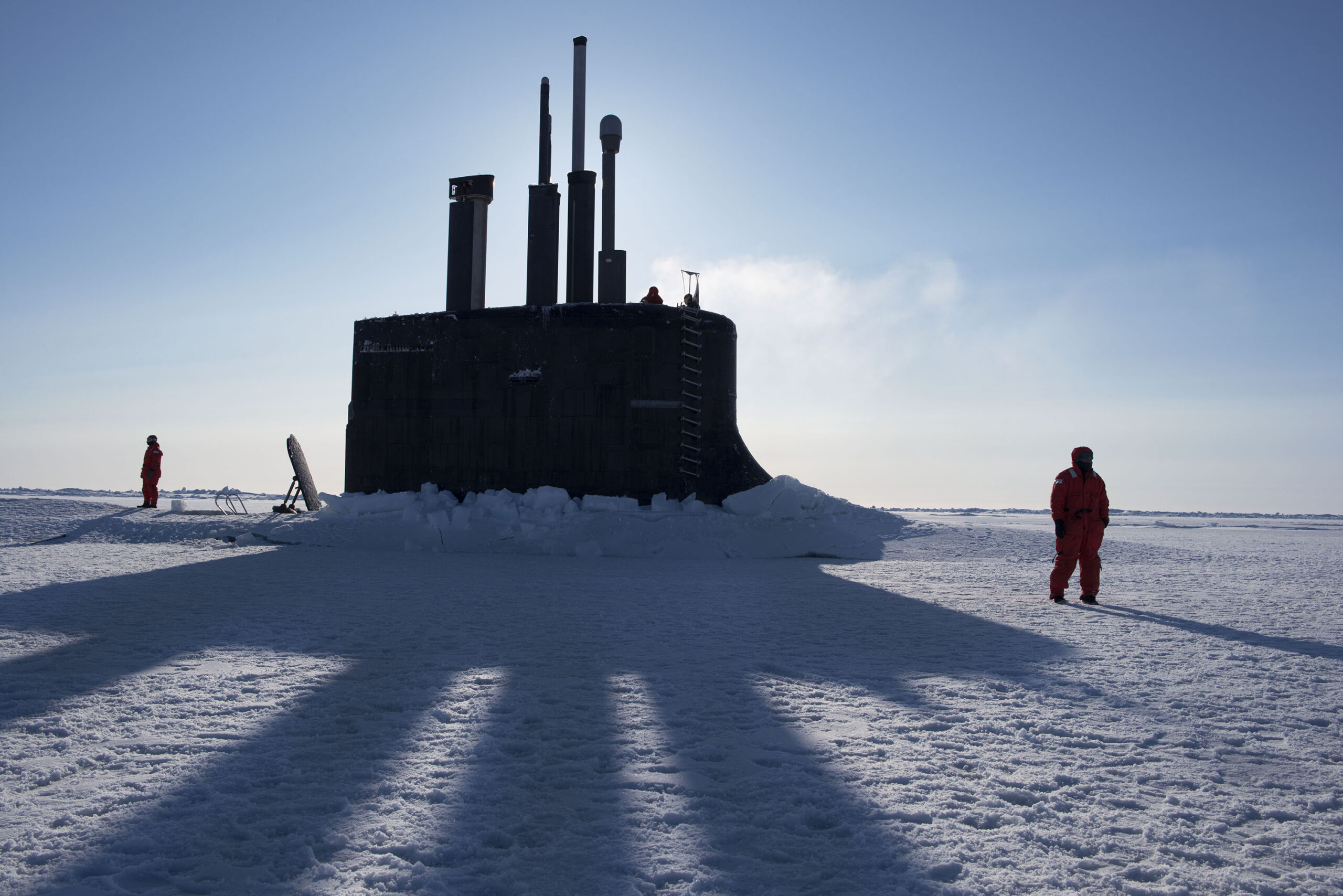
Louie Palu, The USS Connecticut, a US Navy nuclear-powered fast-attack submarine, seen surfaced through the ice . . ., 2015 / 2018; inkjet print, 35 1/8 x 48 7/8 inches; Courtesy of the artist.
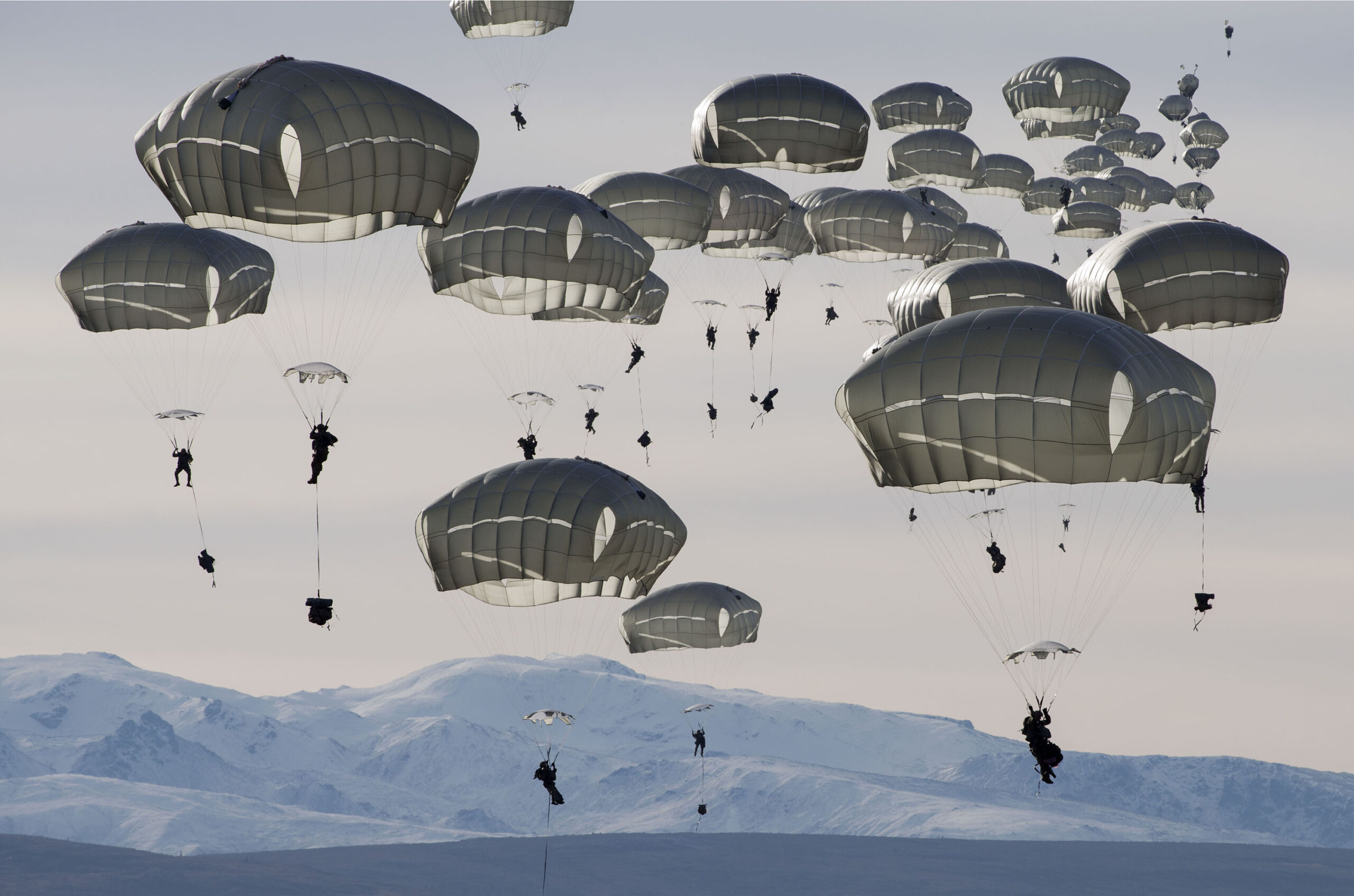
Louie Palu, Just south of the Arctic Circle soldiers from US Army Alaska parachute . . ., 2015 / 2018; inkjet print, 14 3/4 x 18 3/4 inches; Courtesy of the artist.
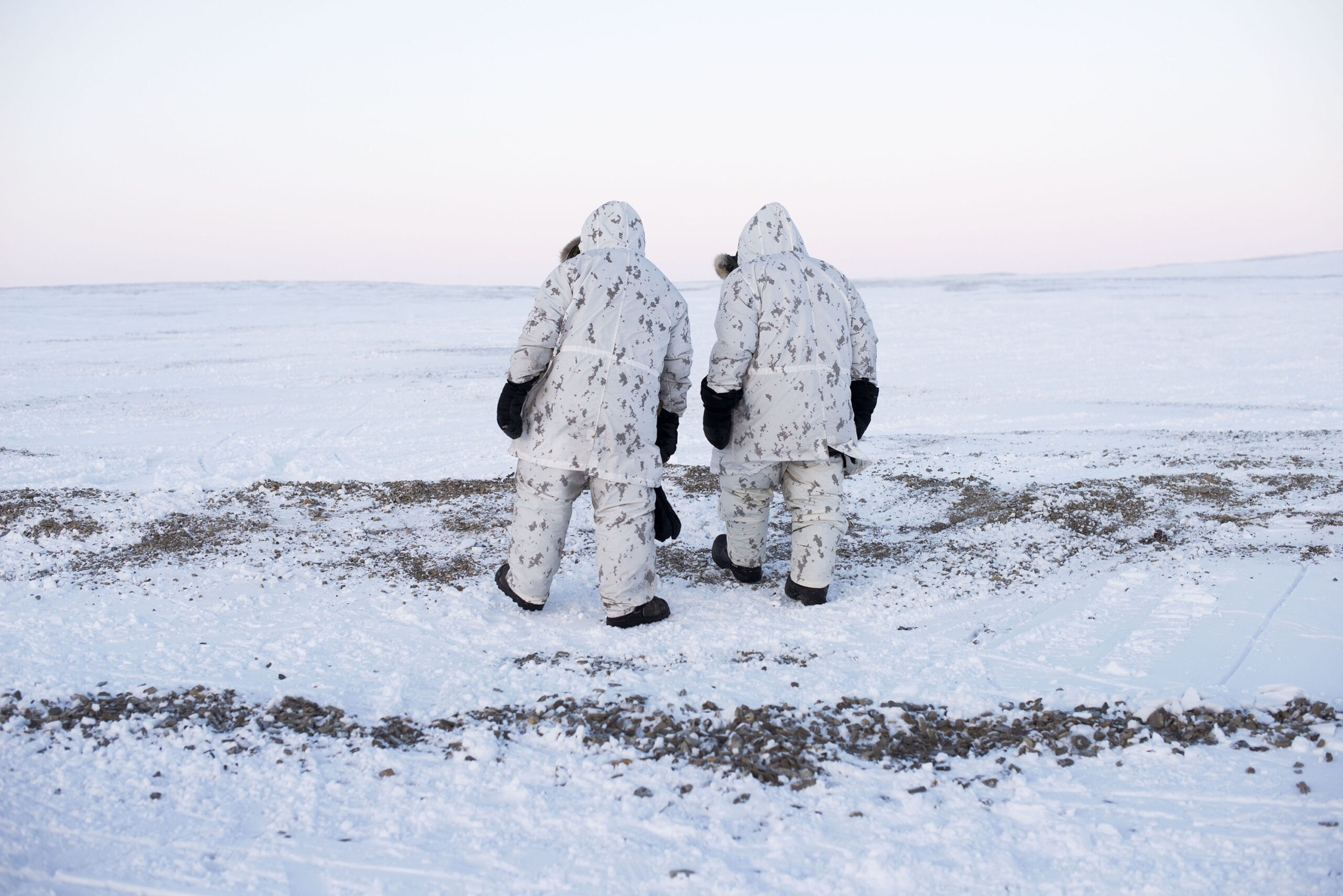
Louie Palu, Canadian Arctic Operations Advisors walk on the shore of a lake . . ., 2015 / 2018; inkjet print, 35 1/8 x 48 7/8 inches; Courtesy of the artist.
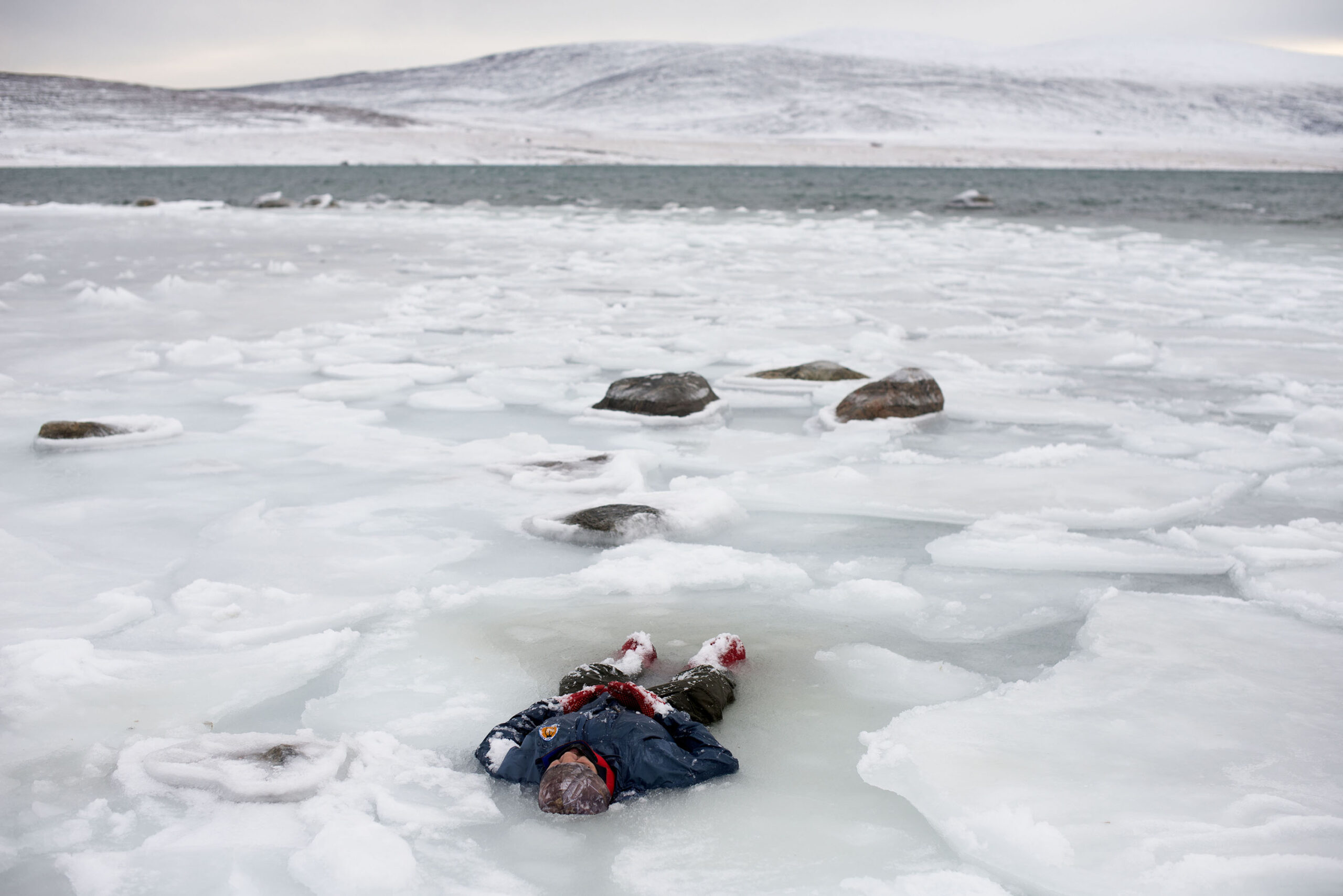
Louie Palu, A Canadian Ranger lies in the ice . . ., 2015 / 2018; inkjet print, 35 1/8 x 48 7/8 inches; Courtesy of the artist.
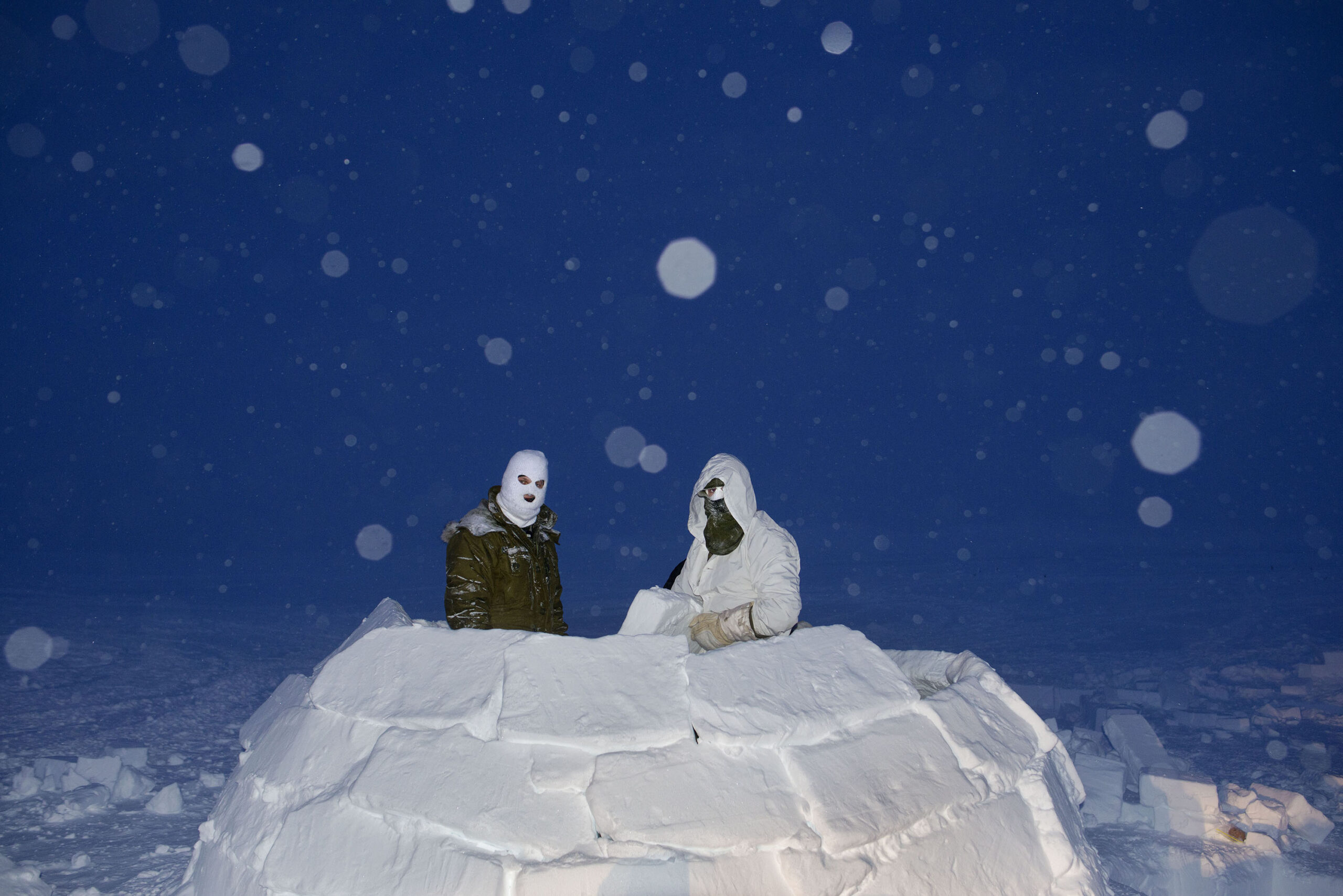
Louie Palu, Canadian soldiers on the Arctic Operations Advisors course build igloos . . ., 2015 / 2018; inkjet print, 20 x 26 3/8 inches; Courtesy of the artist.
Louie Palu, The USS Connecticut, a US Navy nuclear-powered fast-attack submarine, seen surfaced through the ice . . ., 2015 / 2018; inkjet print, 35 1/8 x 48 7/8 inches; Courtesy of the artist.
Arctic Passage
In one of the most extreme and challenging environments on the planet, this exhibition examines the relationships between military personnel and Indigenous communities as a result of mounting geopolitical tensions and climate change.
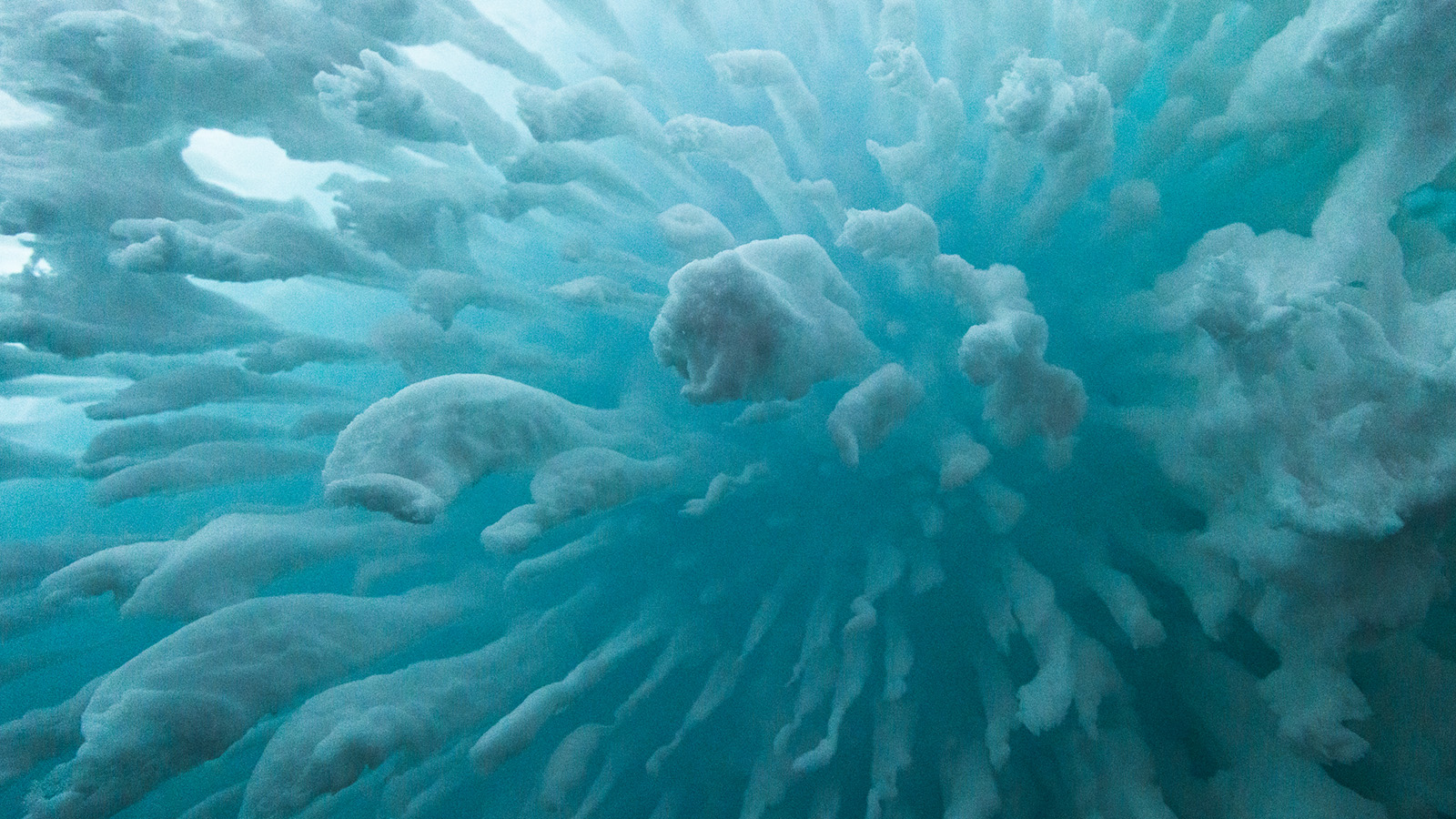
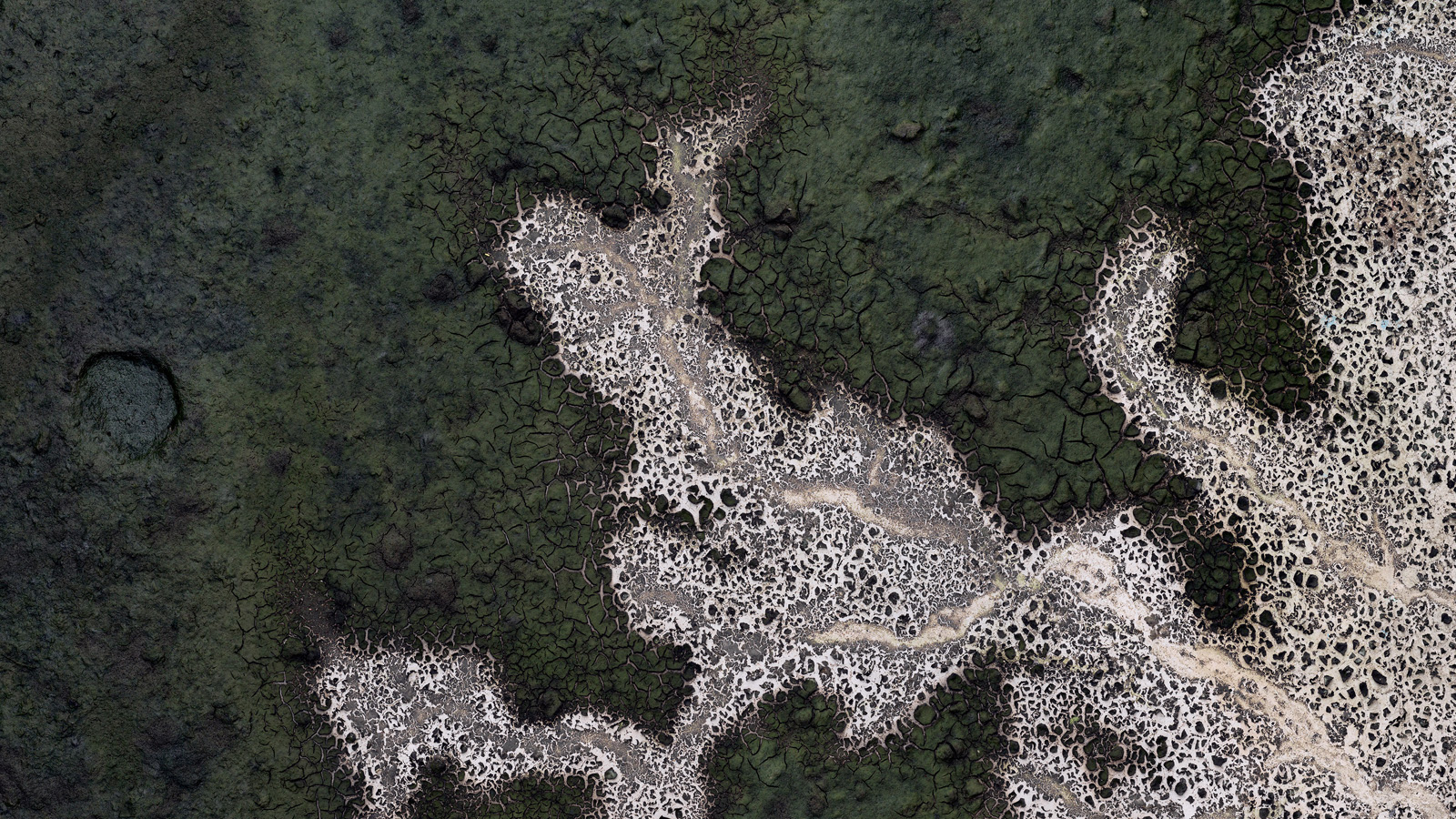
Once considered nearly impenetrable, the Arctic is losing roughly 21,000 square miles of ice each year and warming faster than any other place on the planet. As climate change melts its icy armor, the region is taking on strategic importance, worldwide.
Arctic Passage draws from a multi-year project (2015—2018) by Canadian American photojournalist, Louie Palu, and provides a look at the evolving militarization in the North American Arctic driven by imagined threats from nations with competing economic interests in the region. One of the earliest moments of modern military activity in the Arctic was in the 1950s when the United States and Canada built a series of radar stations: the Distant Early Warning Line, designed to detect any missiles or bombers that may fly over the area.
Now, over 30 years after the end of the Cold War, debates have emerged over more efficient shipping routes, opportunities for resource extraction, and the future of the Arctic related to climate change. Since 2007, Canada, Finland, Greenland (via Denmark), Iceland, Norway, Russia, Sweden, the United States, and China have been increasing their logistical and military capabilities to ensure access to the region and assert sovereignty in what may be called “The New Cold War.”
The Arctic is now at an unprecedented moment in history. Political tensions that once ran East-West now include military and political control aiming north. Currently, there is no active combat in the Arctic, but Indigenous peoples in the region are slowly coming face to face with this increased geo-political activity and tourism. Members of Inuit communities are sharing their knowledge with soldiers learning how to survive in one of the most inhospitable environments on earth, where their biggest adversary is the frigid winter temperature.
“For me, the Arctic is about the unknown, about our imagination. It is often seen through a map, cliché images of ice and animals, outdated stereotypes of indigenous peoples and scientific statistics. It can also be a blank slate for invented narratives to suit fantasies of what people want the Arctic to be. I would like to challenge such perceptions and prompt a shift in consciousness, producing work to make us ask questions about a critically important part of our planet that will reshape not only our environment but also our ideas and strategies of security for the context of global warming.” — Louie Palu
Palu’s work was supported by funding from the John Guggenheim Memorial Foundation, National Geographic Magazine, and Pulitzer Center.
About the Artist
Louie Palu (b. 1968, Canada) is a photographer and filmmaker whose work has examined social political issues, such as human rights and conflict for over 30 years. He is a Guggenheim Foundation Fellow, Milton Rogovin at the Center Creative Photography Fellow, and a Harry Ransom Center Research Fellow. He has been awarded the Arnold Newman Prize for New Directions in Portraiture, and most recently, Palu won the 2022 World Press Photo contest for his series Political Year Zero. His work has appeared in National Geographic Magazine, The New York Times, The Washington Post Magazine, and many others. His photographs are held in numerous collections including the Museum of Fine Arts Boston, Museum of Fine Arts Houston, and National Gallery of Art (Washington DC).
About the Curator
Emily Hauver is Curator of Exhibitions in the Library Gallery at the University of Maryland, Baltimore County. She holds a MS in Museum Studies from Johns Hopkins University. Several of Hauver’s curatorial projects have been situated at the intersection of contemporary photography and important social issues of the day.
Exhibition Details
39 photographs, framed.
- Press Kit
- Registrar’s Packet
- Programming Guide
- Gallery Guide
- Text Panels
- Narrative Labels
- Full Insurance
- Installation Instructions
- Custom-Designed and Built Crates
Emily Hauver
Exhibits USA
Tour Schedule
Arctic Passage is touring November 2027 through October 2032. The dates below reflect seven-week exhibition periods. Dates are subject to change; please contact MoreArt@maaa.org or (816) 800-0925 for current availability.
Supporting Assets
Factsheet
Ready to book?
Contact us to learn more about booking this exhibition for your venue.