
Exhibition Security Levels
Exhibits USA security levels help ensure a safe, successful exhibition experience, for both the artwork and your visitors.
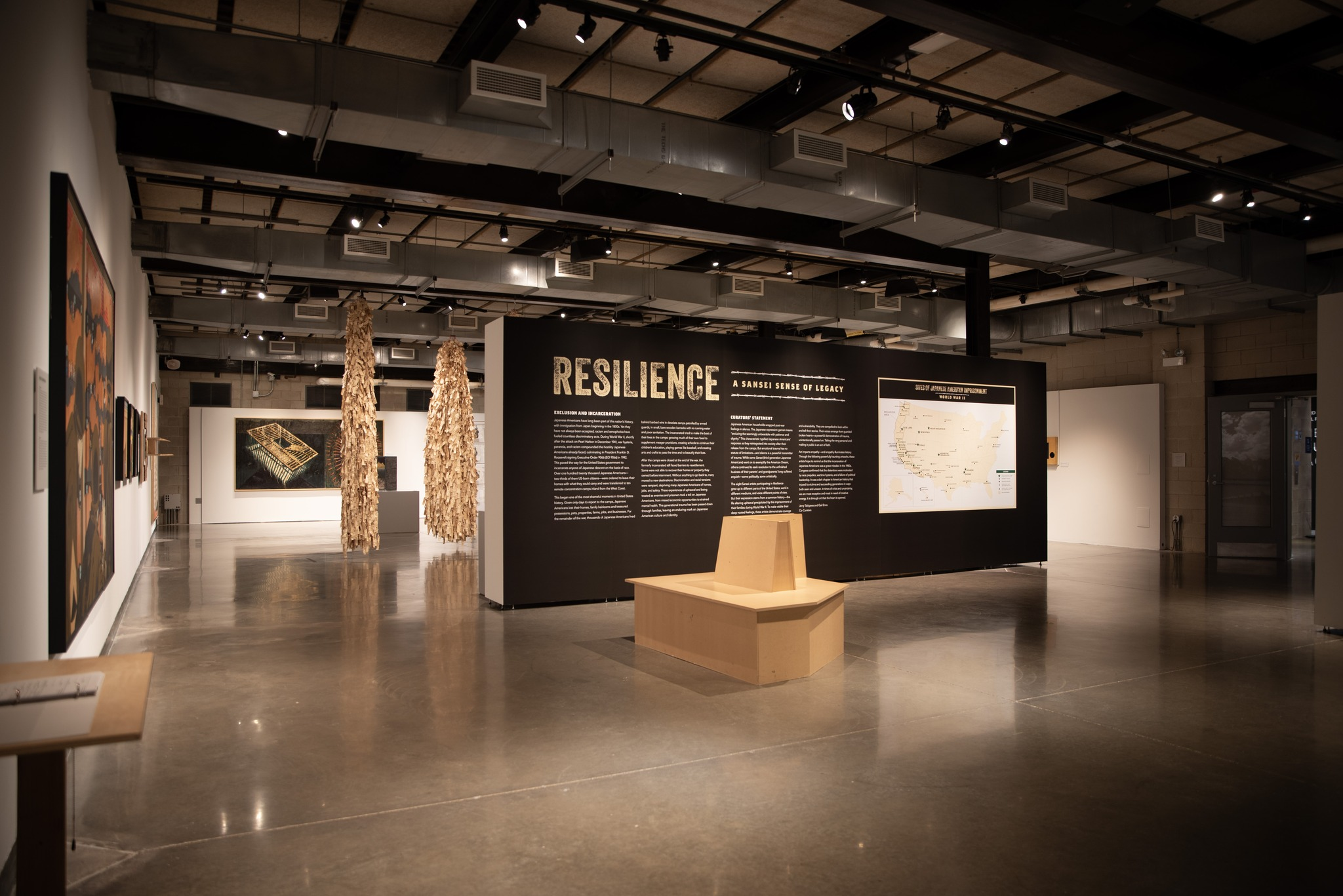
Exhibition view of Resilience—A Sansei Sense of Legacy at the Illinois Holocaust Museum & Education Center (Skokie, Illinois). Photo courtesy of the Holocaust Museum & Education Center.
How Exhibition Security Levels Work
Each of our traveling exhibitions is assigned a security level based on its specific environmental, handling, and risk requirements.
Security levels are designed to:
- Protect artwork throughout shipping, installation, and display
- Ensure appropriate environmental conditions (temperature, humidity, light)
- Establish clear expectations for staffing, supervision, and handling
- Support consistent, successful exhibitions across diverse venues
By matching exhibitions to venue capabilities, we help reduce risk while making touring exhibitions accessible to a wide range of organizations.
Overview of Security Levels
Exhibits USA defines exhibition requirements across four primary security levels:
- Limited
- Standard
- Intermediate
- High
These tiers reflect increasing levels of environmental control, security, and staffing.
Exhibitions that began touring in 2023 or later use updated terminology, though requirements remain closely aligned with previous tiers.
Limited: For exhibitions with minimal environmental or security restrictions. This level is well-suited for flexible spaces with standard environmental controls.
- No food or drink in gallery or around artworks at any time
- Fire protection according to local ordinance
- Limited-access gallery or display area; hallways, lobbies, other traffic-ways not acceptable
- Exhibition space locked after hours
- No temperature extremes (must stay between 65–75°F); HVAC must be running 24/7 for entire run of exhibition period
- No direct sunlight; light sources must have UV filters, and windows will be blocked by shades or blinds at all times
- Responsible supervision of artwork (patrolling personnel or monitored camera)
- Careful handling
Standard: For exhibitions requiring moderate environmental controls and more structured installation. This level supports exhibitions with a mix of object types and display methods.
- Minimum 3 personnel for receiving shipping, installation, de-installation, outgoing shipping
- Handling by volunteers is acceptable only in the presence of trained museum staff
- All activity related to the unpacking, staging, installation, and re-packing of exhibit must take place indoors
- Exhibition contents must not be divided among separate buildings
- Gallery temperature maintained at constant 65–75°F
- Relative gallery humidity constant at 40-55% (with no greater than 10% fluctuation in a 24-hour period)
- No direct sunlight; artificial light sources have UV filters and are not aimed directly at objects; windows will be blocked by shades or blinds at all times
- Light levels should meet specifications listed in exhibit registrar’s packet
- No flash photography
- No food or drink in gallery or around artworks at any time
- Fire protection according to local ordinance
- Limited-access gallery (no exterior unalarmed doors)
- Responsible supervision of artwork (patrolling personnel or monitored camera)
- Exhibition locked after hours, alarms may be required
- When warranted, exhibitor must have or be able to produce display furniture including cases or secured vitrines on pedestals for small objects
Intermediate: For exhibitions with sensitive materials or more complex handling and environmental needs. These exhibitions require careful coordination but remain accessible to many well-equipped venues.
- Minimum 3 trained personnel for receiving shipping, installation, de-installation, outgoing shipping
- Loading area capable of receiving tractor-trailers up to 53 feet in length and high-cube trailers (trailers with inside height of 117–124 inches)
- All activity related to the unpacking, staging, installation, and re-packing of exhibition must take place indoors. Exhibition contents must not be divided among separate buildings
- Temperature and humidity-controlled crate storage
- Must have HVAC and environmental monitoring systems in place
- Gallery temperature maintained at constant 65–75°F degrees
- Relative gallery humidity constant at 40-55% (with no greater than 10% fluctuation in a 24-hour period)
- No direct sunlight; artificial light sources have UV filters and are not aimed directly at objects; windows will be blocked by shades or blinds at all times
- Light levels should meet specifications listed in exhibit registrar’s packet
- No flash photography
- No food or drink in gallery or around artworks at any time
- Fire protection according to local ordinance
- Limited-access gallery (no exterior unalarmed doors)
- Staff trained specifically for secure supervision of the exhibition remain in the display area at all times while exhibition is open to the public
- Exhibition space locked and alarmed after hours
- When warranted, exhibitor must have or be able to produce display furniture including:
- Secured cases or secured vitrines on pedestals for small objects
- Objects on the floor or on very large pedestals must have ropes or other barriers to keep public at least 40 inches from the exhibition object at all times
High: For exhibitions with significant value, fragility, or complex requirements. This level is typically reserved for high-value or highly sensitive exhibitions.
- Minimum 3 professional staff for receiving shipping, installation, de-installation, outgoing shipping
- Loading area capable of receiving tractor-trailers up to 53 feet in length and high-cube trailers (trailers with inside height of 117–124 inches)
- All activity related to the unpacking, staging, installation, and re-packing of exhibition must take place indoors
- Exhibition contents must not be divided among separate buildings
- Temperature and humidity-controlled crate storage (temperature maintained at constant 68-72°F; relative humidity constant at 45-55%)
- Must have HVAC and environmental monitoring systems in place
- Gallery temperature maintained at constant 68-72°F
- Relative gallery humidity constant at 45-55% (with no greater than 10% fluctuation in a 24-hour period)
- No direct sunlight; artificial light sources have UV filters and are not aimed directly at objects; windows will be blocked by shades or blinds at all times
- Light levels should meet specifications listed in exhibit registrar’s packet
- No flash photography
- No food or drink in gallery or around artworks at any time
- Fire protection according to local ordinance
- Limited-access gallery (no exterior unalarmed doors)
- Trained, professional guards in sufficient number to adequately protect exhibition
- Exhibition locked after hours; alarms or night guards must be in place
- When warranted, exhibitor must have or be able to produce display furniture including:
- Secured cases or secured vitrines on pedestals for small objects
- Objects on the floor or on very large pedestals must have ropes or other barriers to keep public at least 40 inches from the exhibition object at all times
- Other restrictions as required which may include, but are not limited to:
- Additional staff requirements for installing and monitoring artwork
- Facility reports reviewed by lending institutions
Facility Reports & Approval
All venues must submit a Facility Report corresponding to the exhibition’s assigned security level. This report evaluates:
- Environmental controls (temperature, humidity, HVAC)
- Building and gallery conditions
- Security systems and supervision
- Installation and handling capabilities
Facility Reports must be reviewed and approved before a contract is issued. This ensures both the safety of the artwork and a smooth hosting experience.
Questions About Security Requirements?
Our team is available to guide you through requirements and help you identify exhibitions that align with your capabilities.
Contact our registrar for guidance or to review your facility’s readiness for a specific exhibition.