Taking Heart: An Exhibition about Humanity, Healing, and Art
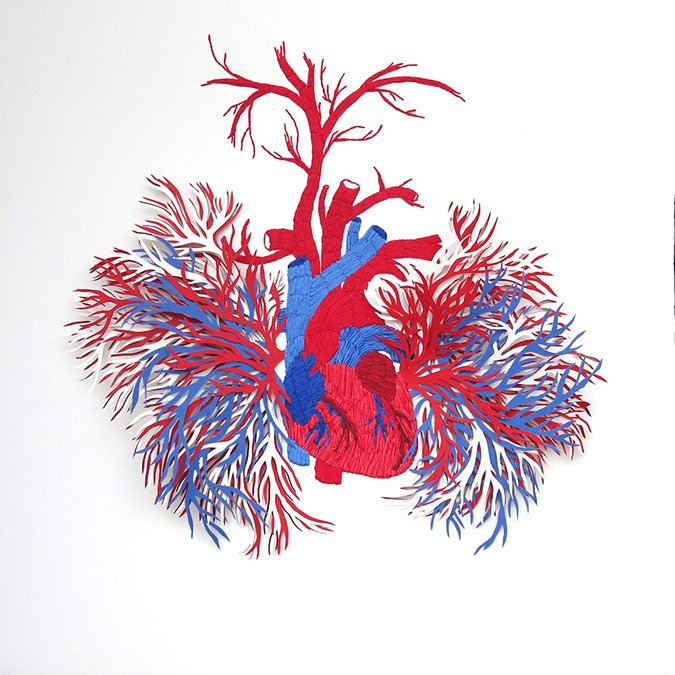
Bhavna Mehta, Beat, 2016; embroidery and cutting on Stonehenge paper, 19 x 19 inches; Courtesy of the artist.
Patients Are People First: Taking Heart and the Art of Disability
In a time of division, there are surprising ways to rediscover our shared humanity, desires, and frailty. Taking Heart: Artists on Healing, Health, and Care unites nine contemporary artists living with disability and chronic illness. Available for venues to book through Exhibits USA, the traveling exhibition reimagines hospitals and healing as joyful and surprising art. It’s a creative show that is less about “them” and more about “us.”
“We’re all disabled in some ways, and we’re all going to be disabled as we age,” says exhibit curator Amanda Cachia, PhD, who is a disability studies scholar. “Disability can include medicine and health and chronic illness and old age and neurodiversity and learning disabilities. It’s a very wide net.”
With this inclusivity in mind, Amanda created Taking Heart, an exhibition she describes as “hopeful and visually rich.” She recently shared her thoughts on the exhibit, its audiences, and how art can build conversation, connection, and community.
What is Taking Heart: Artists on Healing, Health, and Care in two sentences?
Amanda Cachia: It’s a show of nine artists who have spent a lot of time in hospitals and turned that experience into art: glittering operating rooms, butterfly wings made from hospital gowns, embroidered hearts. It’s about how we take part in our own healing, and it’s surprisingly joyful.”
What is a possible discomfort that we can address straight out?
Amanda: Some staff worry the show will be sad, or that it shows bodies and medical scenes in ways visitors won’t expect. Let’s name it plainly. A few works show surgery, X-rays, and prosthetics. Katherine Sherwood’s Thique (Venus with Chair) is a nude that updates the reclining Venus, one of the oldest traditions in Western painting. None of this is presented for shock. The artists make these subjects beautiful, often funny, and always on their own terms.
The second worry is quieter: “What if we use the wrong words?” You don’t need to be an expert to host this show. Ask the artists and local disabled visitors what language they prefer, and treat them as the experts on their own lives. That openness matters more than getting every term right the first time.
“It’s a warm show. It’s hopeful and visually rich, and it’s easy to invite a broad public into.”
– Amanda Cachia, curator, Taking Heart: Artists on Healing, Health, and Care
What is going to happen when venues show this exhibition?
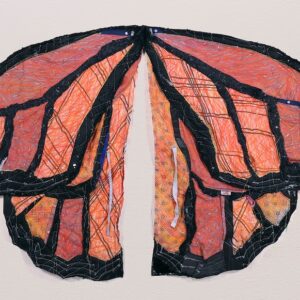
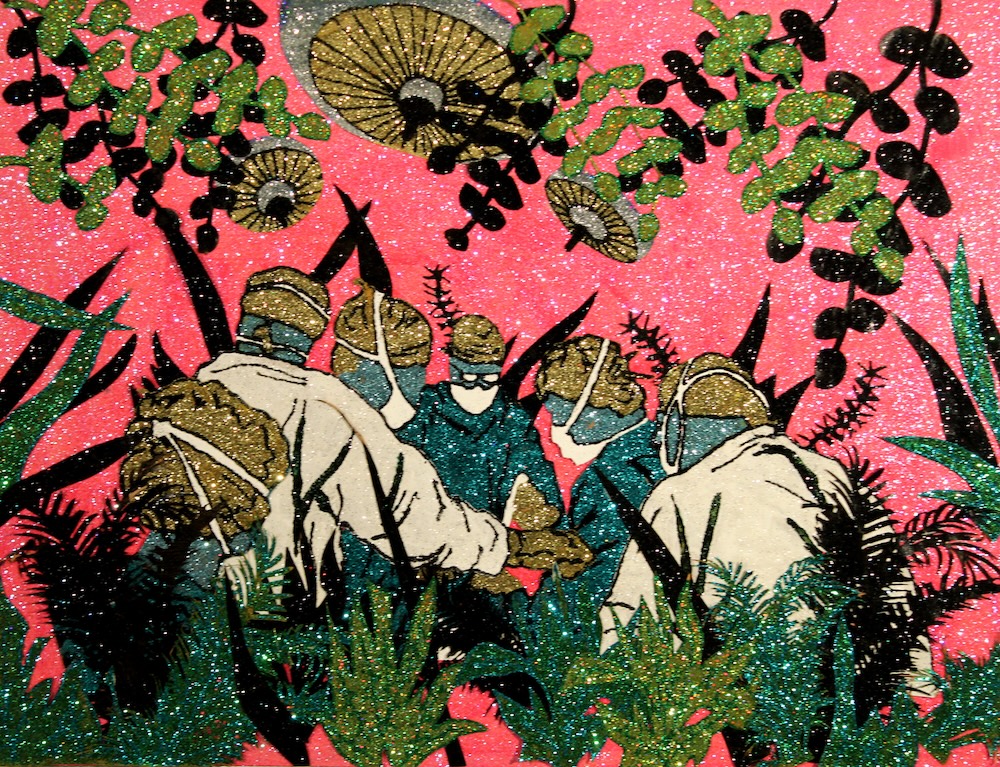
Amanda: People recognize themselves. Almost everyone has sat in a waiting room, held a loved one’s hand after surgery, or managed a condition day to day. When visitors see Dylan Mortimer’s operating room glittering in jewel tones, or Dominic Quagliozzi’s monarch wings stitched from hospital gowns and grippy socks, they often smile first and then start telling their own stories.
Venues also meet new audiences. Nurses, doctors, caregivers, patient-advocacy groups, and disabled community members come to this show because it is about their lives. Many of them are not regular gallery visitors, and they tend to come back for programs. Over roughly 50 exhibitions, I have seen disability art build some of the most lasting community relationships a venue can make.
What do you want viewers to take away from this exhibition?
Amanda:
- That each of us can take an active part in our own health by asking questions, naming what we need, and choosing what healing means for us.
- That care is shared. Family, friends, caregivers, and medical teams all belong to the story.
- That disability is an ordinary part of human life. About one in four US adults lives with a disability, according to the CDC.
- That beauty and humor can be found in the hardest places, even a hospital bed.
“Each of us can take an active part in our own health by asking questions, naming what we need, and choosing what healing means for us.”
– Amanda Cachia, curator, Taking Heart: Artists on Healing, Health, and Care
What do you, the curator, want people to know about the exhibition?
Amanda: These are artists first. They are not case studies or inspirational stories. They are painters, sculptors, embroiderers, and performers with serious practices, and they make work that holds its own in any gallery.
In this exhibition, healing doesn’t mean cure. It means comfort, agency, community, and feeling at home in your own body.
What do venues need to know about this exhibition?
Amanda: It’s a full, professionally supported show that includes 44 works, interpretive panels and labels, custom crates, a marketing kit, and a programming resource guide. It needs about 216 linear feet of wall and is fully insured by Exhibits USA. Most of all, it’s a warm exhibition. It’s hopeful and visually rich, and it’s easy to invite a broad public into.
“You don’t need to be an expert to host this show. Ask the artists and local disabled visitors what language they prefer, and treat them as the experts on their own lives. That openness matters more than getting every term right the first time.”
– Amanda Cachia, curator, Taking Heart: Artists on Healing, Health, and Care
How could venues adapt this exhibition?
Amanda: The show is built to flex. Exhibits USA’s interpretive team works with each venue to fit the selection to its space or floorplan, and you can add to it as long as you let them know your plans. A few approaches I’d love to see:
- Add local voices. Invite disabled artists or patient storytellers from your region, or set up a response wall asking, “What does taking heart look like for you?”
- Partner with health care. Hospitals, nursing and medical schools, and patient-advocacy groups make natural co-hosts for talks and staff visits.
- Make with your hands. Offer cut-paper and embroidery workshops inspired by Bhavna Mehta, or collage from everyday materials in the spirit of Dominic Quagliozzi.
- Build in rest and access. Add seating, quiet hours, large-print labels, and verbal description tours. These choices echo the exhibition’s own ideas about care.
Why did you put this together?
Amanda: While researching my book Hospital Aesthetics, I kept seeing disabled artists return to the hospital as a subject. The hospital is where many of us feel least in control, and these artists were bringing creativity, humor, and beauty into exactly that space. I wanted audiences to see that work together, because as a group it tells a larger story about how people take charge of their own care.
I also wanted it to travel. Touring through Exhibits USA brings this work to community museums and galleries across the country, not only to major cities. The people who most need to see it live everywhere.
Why now?
Amanda: More people than ever are managing their own health, whether that means long-term conditions, long COVID, aging parents, or a medical system that asks patients to be their own advocates. About one in four adults in the US lives with a disability. This exhibition speaks directly to that shared experience.
Museums are also rethinking how they support well-being and belonging in their communities. Taking Heart gives venues a thoughtful, beautiful way to do that, and it puts artists who have long been left out of the gallery in the center of the room.
Insight If You Haven’t Done an Exhibit about Disability
Disability can be a touchy subject. Many venues keep the topic at arm’s length, concerned about language and liability.
Amanda Cachia offers advice and resources for organizations that haven’t broached the subject of disability or hosted an exhibit about it before. For those hosting Taking Heart, she suggests starting with the Exhibits USA programming guide that comes with the exhibition. And then?
“Reach out to a local disability organization or independent living center,” Amanda says. “They are your best partners and first audience.”
Beyond these valuable collaborators, she also suggests these resources:
- Smithsonian Guidelines for Accessible Exhibition Design is a practical reference for labels, lighting, seating, and circulation.
- Kennedy Center Leadership Exchange in Arts & Disability (LEAD) Research & Resources and the annual LEAD Conference form the national network for arts and disability staff.
- Centers for Disease Control and Prevention (CDC): Disability Impacts All of Us offers clear figures for grant writing and board conversations.
For staff who want to go deeper, Amanda’s books Curating Access: Disability Art Activism and Creative Accommodation (2022), The Agency of Access (2024), and Hospital Aesthetics (2025) are valuable resources as well. Amanda is also happy to visit with venue teams hosting Taking Heart.
FAQ’s and Resources
View the full gallery and see the exhibition’s tour schedule.