Four Exhibitions Show What Art & Health Look Like Up Close
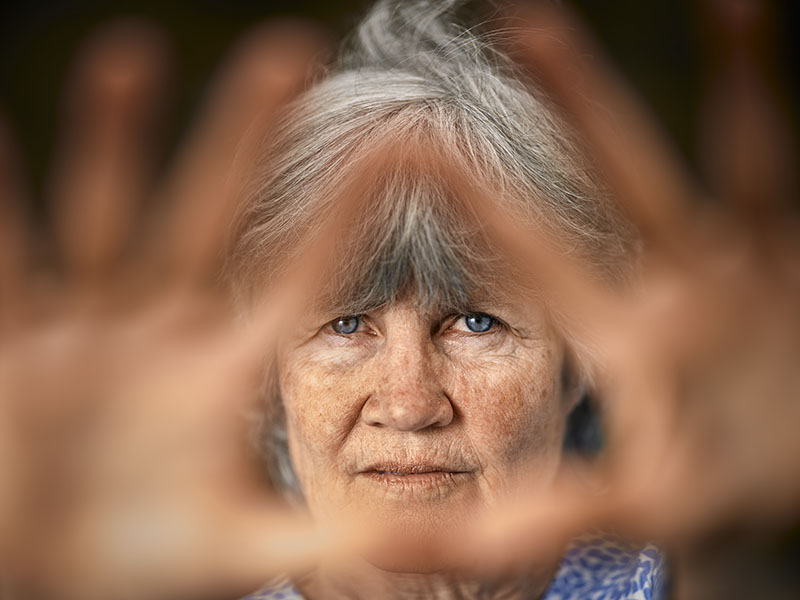
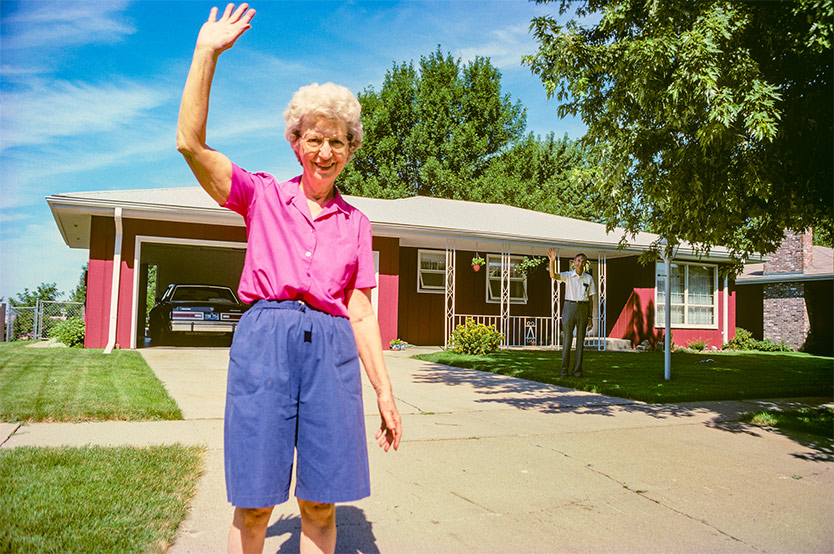
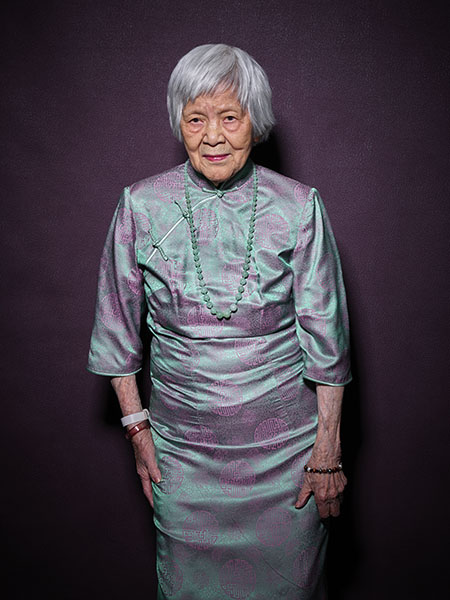
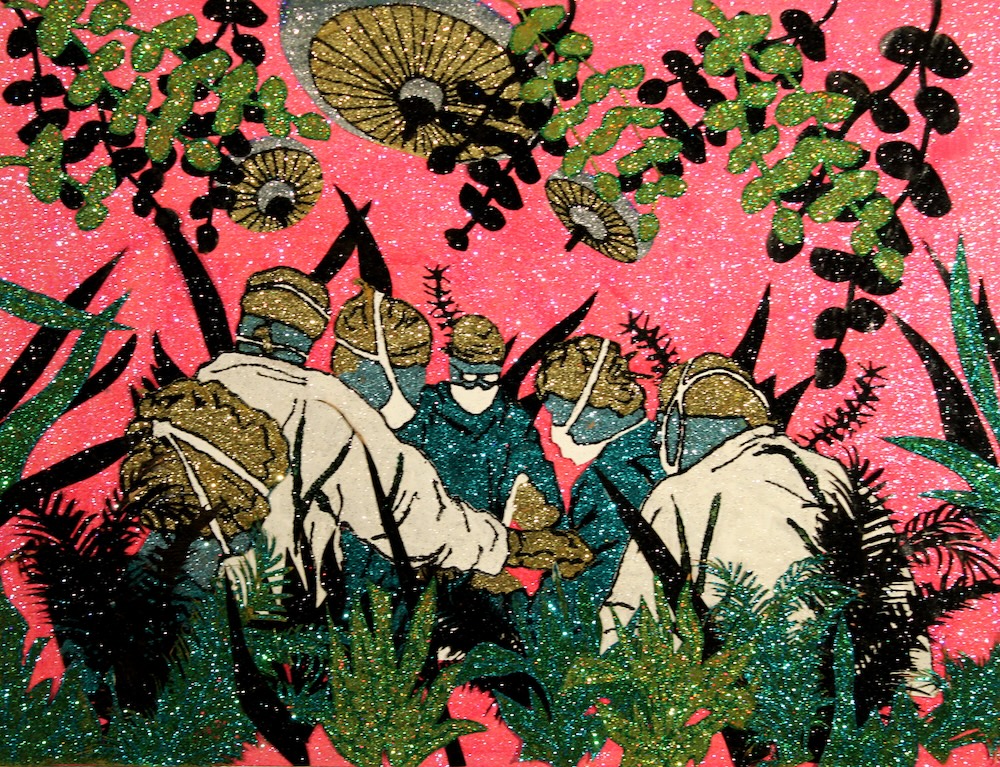
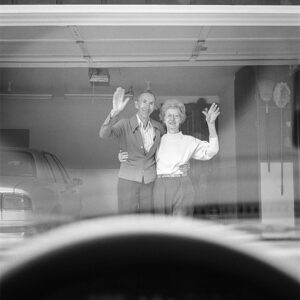
A wooden box holds one elderly woman’s wish to be “looked in the eye.” A portrait of Edwin Bartlett, a sadness tugging at the corner of his smile, large hands that could repair or build just about anything, reveals a father, a husband, a brother—the man—behind a diagnosis of dementia. A glittery painting reimagines surgery, ferns and foliage transforming an operating theater into a scene of shimmering hope. A photograph of a mother, waving from the same driveway she’s waved from for 30 years, reminds us of family, loss, and cherished memory.
None of these artworks by Marn Jensen, Joe Wallace, Dylan Mortimer, and Deanna Dikeman are clinical expressions of art and health. And yet, every one of them is evidence of connection, belonging, and resilience.
Current research on art and health validates what these four artists already know, that being fully seen—by a caregiver, a surgeon, your family, your community—is its own form of healing.
And making art is its own medicine, a truth each of the artists has lived.
The National Endowment for the Arts continues to study how the arts show up in health and well-being, from childhood development to healthy aging. Dr. Daisy Fancourt, a professor of psychobiology and epidemiology at University College London who has spent 15 years studying the arts’ effect on health, calls engaging in the arts “the forgotten fifth pillar of health,” alongside diet, sleep, exercise, and nature —and argues we’ve wrongly reduced it to mere entertainment.
And going to see art? Yep, it’s good for your health, too.
Regular arts and cultural engagement, including attending exhibitions and museums, was linked to slower biological aging, with effects comparable to regular physical activity.
For venues thinking about their next traveling exhibition, that research is also an invitation. The right exhibition doesn’t just fill a gallery, it gives your community a reason to gather, reflect, and see themselves and each other more clearly.
Portraits of Dementia
Touring now — bookings available
More than 50 million people are living with dementia worldwide, yet the public conversation around it is often limited to fear and loss. Photographer Joe Wallace, whose own family has navigated Alzheimer’s and vascular dementia across three generations, set out to widen that lens.
Portraits of Dementia pairs intimate portraits with the stories behind them, showing the love, dignity, and humanity that persist alongside the diagnosis, for patients, care partners, and families alike.
- A tip from this exhibition’s programming guide:
Consider hosting a memory café alongside the exhibition, a relaxed gathering for people with dementia and their caregivers built around conversation, music, or a simple shared activity. You don’t have to start from scratch; the Memory Café Directory can connect you with an existing one nearby to co-host a special edition timed to the exhibition’s run.
Art of the Wish
Touring now — bookings available

What’s your wish for the world? In 2017, artists Marn Jensen and Andy Newcom spent six months traveling the country to ask exactly that, sitting with more than 250 people in their 80s, 90s, and beyond in senior living communities and hospices. They then built mixed-media works, often from found and repurposed materials, around what each person said.
The result is Art of the Wish, an exhibition of generational storytelling that’s as much about listening as it is about looking.
- A tip from this exhibition’s programming guide:
Partner with a local long-term care facility to “adopt” residents who don’t often get visitors. Your venue can help with transportation to the exhibition, set up a pen-pal writing station, or connect visitors willing to lend an ear with elders looking for company, extending the exhibition’s spirit well past its closing date.
Taking Heart: Artists on Healing, Health, and Care
Available for booking, opening September 2027
Nine contemporary artists living with disability and chronic illness turn their own hospital stays, treatments, and recovery into art that is anything but clinical in Taking Heart: Artists on Healing, Health, and Care.
Dominic Quagliozzi, for example, builds monarch butterfly wings out of hospital gowns, grippy socks, and Mylar balloons. Here, the ordinary materials of a hospital stay are reimagined as a symbol of transformation.
Healing, throughout the exhibition, doesn’t always mean a cure. Sometimes it means finding comfort, building strength, or simply feeling at home in your own body, and the artists make clear that none of them do this alone. Friends, family, caregivers, and medical teams all show up in the work, a reminder that caring for our health is rarely something we do by ourselves. Through drawing, painting, sculpture, installation, and video, the artists invite visitors to slow down and look at health and care from a new angle.
Everyone who has sat in a waiting room will find something familiar here, and perhaps something encouraging, too.
- Program idea to consider:
This exhibition is a strong fit for university museums and galleries with disability studies, bioethics, or medical humanities programs. Consider partnering with a campus disability services office or a local Center for Independent Living on an opening reception or artist talk.
Relative Moments
Available for booking, opening June 2028
Over three decades, photographer Deanna Dikeman documented her own Midwestern family—her parents, her son, and a close circle of aunts and uncles—through the dishes, the gardens, the Christmas trees, and, most famously, the driveway goodbyes photographed at the end of each visit with her parents, which became her Leaving and Waving series.
The New Yorker named it one of its top stories of 2020, and it’s easy to see why: the work is unguarded, specific, and instantly recognizable to anyone who has ever had to wave goodbye to a loved one.
- Program idea to consider:
This exhibition resonates broadly. Libraries, historical societies, and general-interest museums tend to see strong turnout for shows built on universal family experience. Consider partnering with a local senior center or hospice organization for a community conversation on aging, caregiving, and the rituals of goodbye.
Each of these exhibitions makes the case that art isn’t separate from health and connection. It’s one of the more direct paths to it. If you’re ready to bring one to your venue, contact the Exhibits USA team to check availability and start planning your programming.