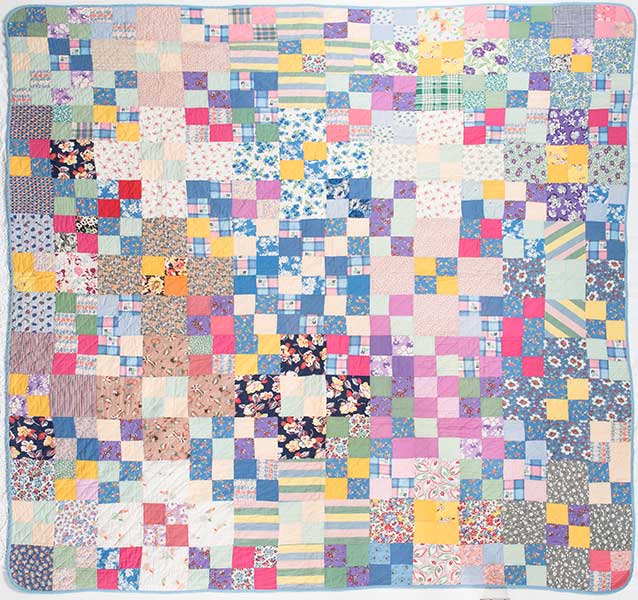
Seviella Smith Frischer (1893-1969), Four Patch Quilt, c. 1930; feed sack cotton, 80 x 75 inches; Courtesy of Kansas State University Historic Costume and Textile Museum.
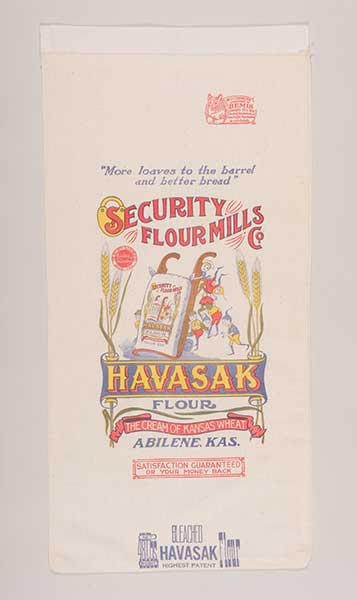
Manufactured by Bemis Bag Manufacturing, Inc., Kansas City, Missouri Feed Sack for Security Flour Mill, Abilene, Kansas, c. 1940; feed sack cotton, 29 5/8 x 15 1/2 inches; Courtesy of Kansas State University Historic Costume and Textile Museum.
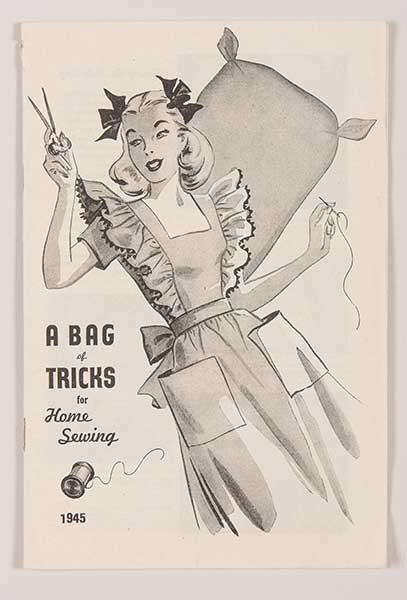
National Cotton Council, A Bag of Tricks for Home Sewing, 1945; paper and ink, 8 1/4 x 5 1/2 inches; Courtesy of Kansas State University Historic Costume and Textile Museum.
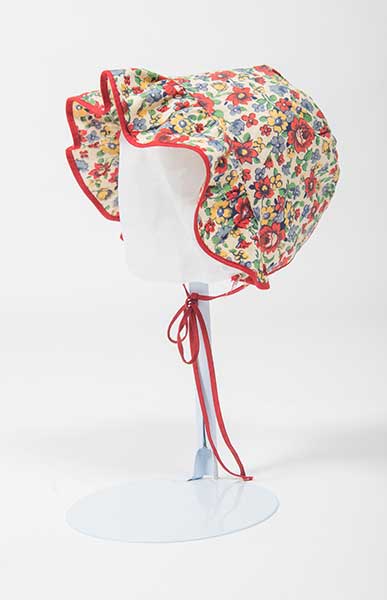
Seviella Smith Frischer (1893-1969), Child’s Bonnet, c. 1938; feed sack cotton and bias tape, 8 1/2 x 10 inches; Courtesy of Kansas State University Historic Costume and Textile Museum.
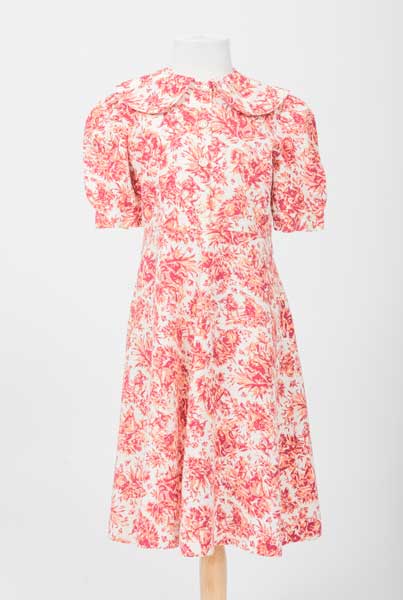
Unidentified maker, Child’s Dress, c. 1935; feed sack cotton, 36 x 33 inches; Courtesy of Kansas State University Historic Costume and Textile Museum.
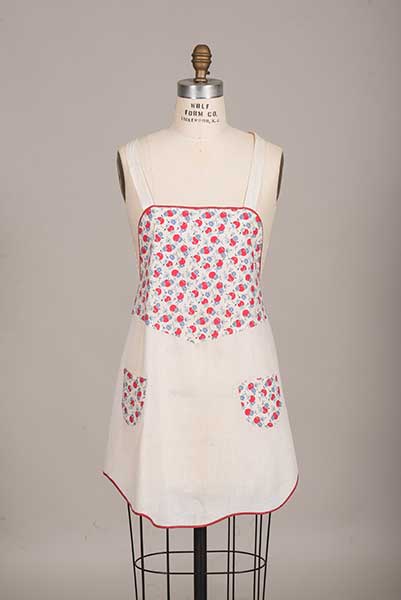
Seviella Smith Frischer (1893-1969), Apron, c. 1940; feed sack cotton and bias tape, 37 1/2 x 28 inches; Courtesy of Kansas State University Historic Costume and Textile Museum.
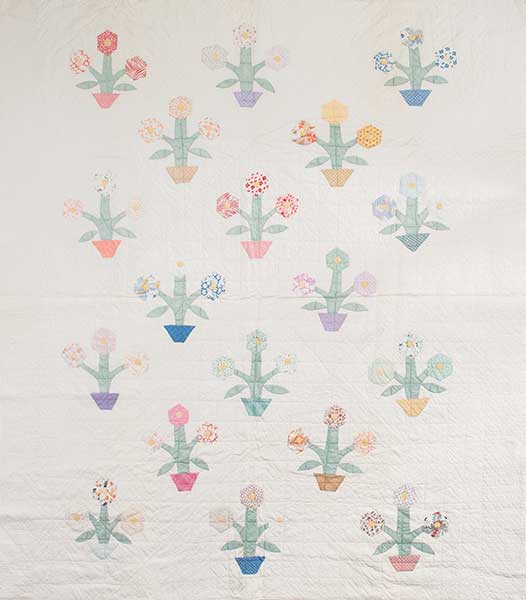
Seviella Smith Frischer (1893-1969), Eva Norfleet, Katherine Geyer Bowen, Applique Quilt, c. 1940; feed sack cotton and bias tape, 82 x 74 inches; Courtesy of Kansas State University Historic Costume and Textile Museum.
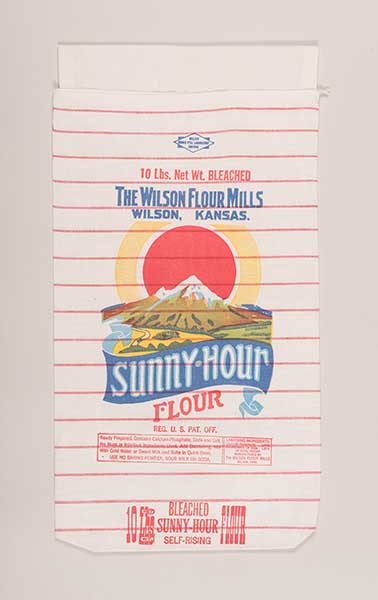
Manufactured by Werthan, Nashville, Tennessee, Feed Sack for The Wilson Flour Mills, Wilson, Kansas, c. 1940; feed sack cotton, 16 7/8 x 9 3/4 inches; Courtesy of Kansas State University Historic Costume and Textile Museum.
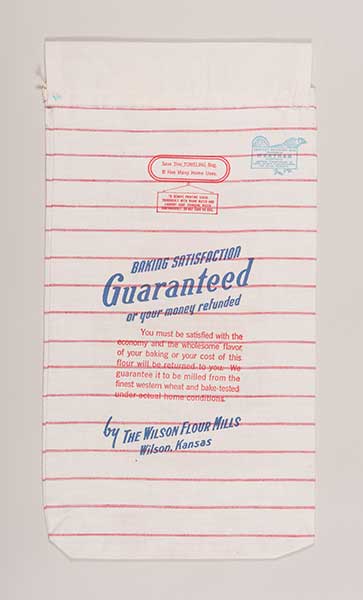
Manufactured by Werthan, Nashville, Tennessee, Feed Sack for The Wilson Flour Mills (back), Wilson, Kansas, c. 1940; feed sack cotton, 16 7/8 x 9 3/4 inches; Courtesy of Kansas State University Historic Costume and Textile Museum.
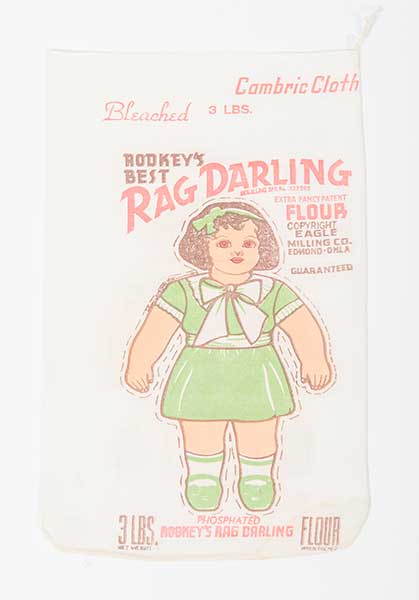
Manufactured by Percy Kent Bag Co., Kansas City, MO, Flour Sack for Eagle Milling Co, Edmond, Oklahoma, c. 1940; feed sack cotton, 11 x 7 inches; Courtesy of Kansas State University Historic Costume and Textile Museum.
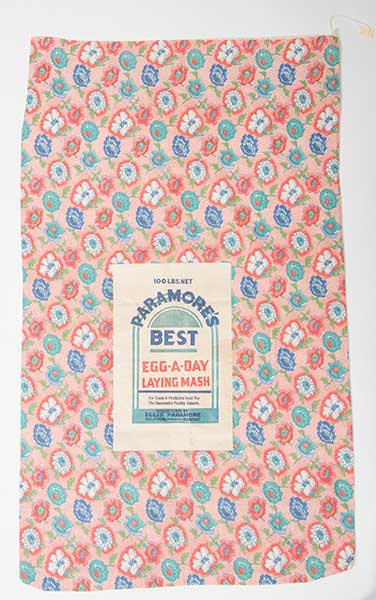
Unidentified manufacturer, Feed Sack for Ellis Paramore, Delphos, Kansas, c. 1940; feed sack cotton, 37 1/2 x 22 inches; Courtesy of Kansas State University Historic Costume and Textile Museum.
Seviella Smith Frischer (1893-1969), Four Patch Quilt, c. 1930; feed sack cotton, 80 x 75 inches; Courtesy of Kansas State University Historic Costume and Textile Museum.
Thrift Style
Thrift Style explores the reuse of feed sacks to make clothing and other household objects and illuminates how the “upcycling” of these bags mutually benefited twentieth-century consumers and businesses. With 41 works from patterns to garments, it serves as an example of past ingenuity.
TOUR EXTENDED! NEW BOOKING DATES AVAILABLE!
Thrift Style explores the reuse of feed sacks to make clothing and other household objects and illuminates how the “upcycling” of these bags mutually benefitted twentieth-century consumers and businesses. With forty-one works from patterns to garments, it serves as an example of past ingenuity that can inform today’s efforts towards sustainability.
The exhibition, organized by the Historic Costume and Textile Museum and the Marianna Kistler Beach Museum of Art, both at Kansas State University, provides a nostalgic view into American ingenuity, sensibility, and optimism during a particularly challenging time of economic hardship and war—the period of the Great Depression and World War II. The reuse of feed, flour, and sugar sacks was a cost-saving and resource-saving approach employed by homemakers to make new items to meet their families’ needs.
In the 1920s and ‘30s, manufacturers began producing patterned and colored feed sacks to give home seamstresses more options. During World War II, the federal government limited fabric use for individual garments and homemakers were obligated to use thrifty approaches to repurpose what was available to them. As fabrics from feed sacks were not considered a limited resource, women turned to them as an accessible and patriotic option during the war effort. In response, trade organizations and manufacturers promoted the thrifty use of feed sack fabric by publishing how-to brochures and booklets with clothing designs, mending instructions, and other suggestions for restyling clothes.
The artifacts in the exhibition demonstrate a mutual goal of sustainability, with local businesses—mills and feed and seed operations—tailoring product design and marketing campaigns to attract customers; and consumers using their imaginations and practical skills to tailor clothing, aprons, quilts, dolls, and more out of the industry’s byproduct: feed sack cotton.
This exhibition offers a snapshot of domestic life during this time, when recycling was as critical as it is today, and it provides one of the best examples of upcycling in our nation’s history.
Exhibition Details
- Press Kit
- Registrar’s Packet
- Programming Guide
- Gallery Guide
- Text Panels
- Narrative Labels
- Full Insurance
- Installation Instructions
- Custom-Designed and Built Crates
Exhibits USA
Tour Schedule
Thrift Style is touring October 2020 through August 2027. The available dates below reflect seven-week exhibition periods. Dates are subject to change; please contact MoreArt@maaa.org or (800) 473-3872 x208/209 for current availability.
Supporting Assets
Factsheet
Ready to book?
Contact us to learn more about booking this exhibition for your venue.