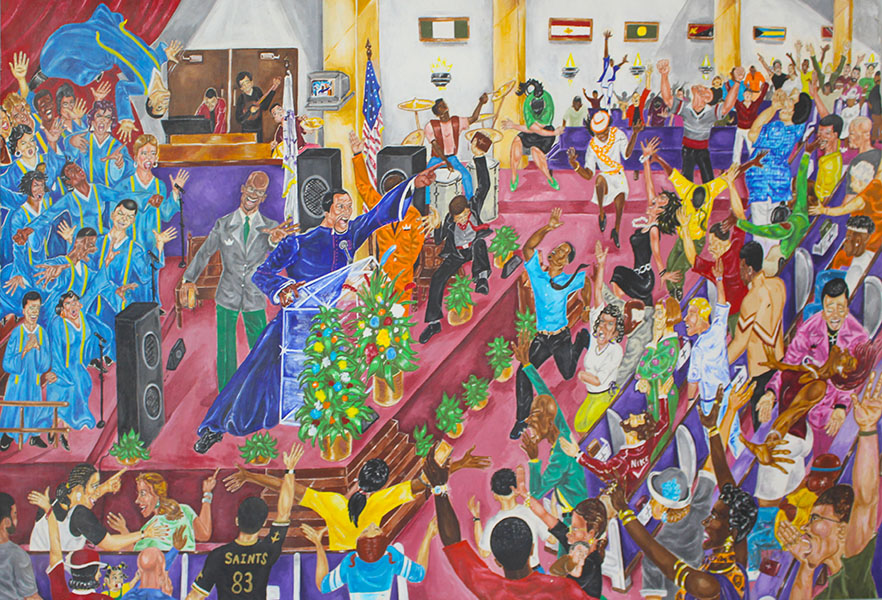
Ransom “Rocky” McCormick (b. 1975), Moved by the Word, c. 2001; paint on paper, 30 x 44 inches; Courtesy of CJ Williams Collection.
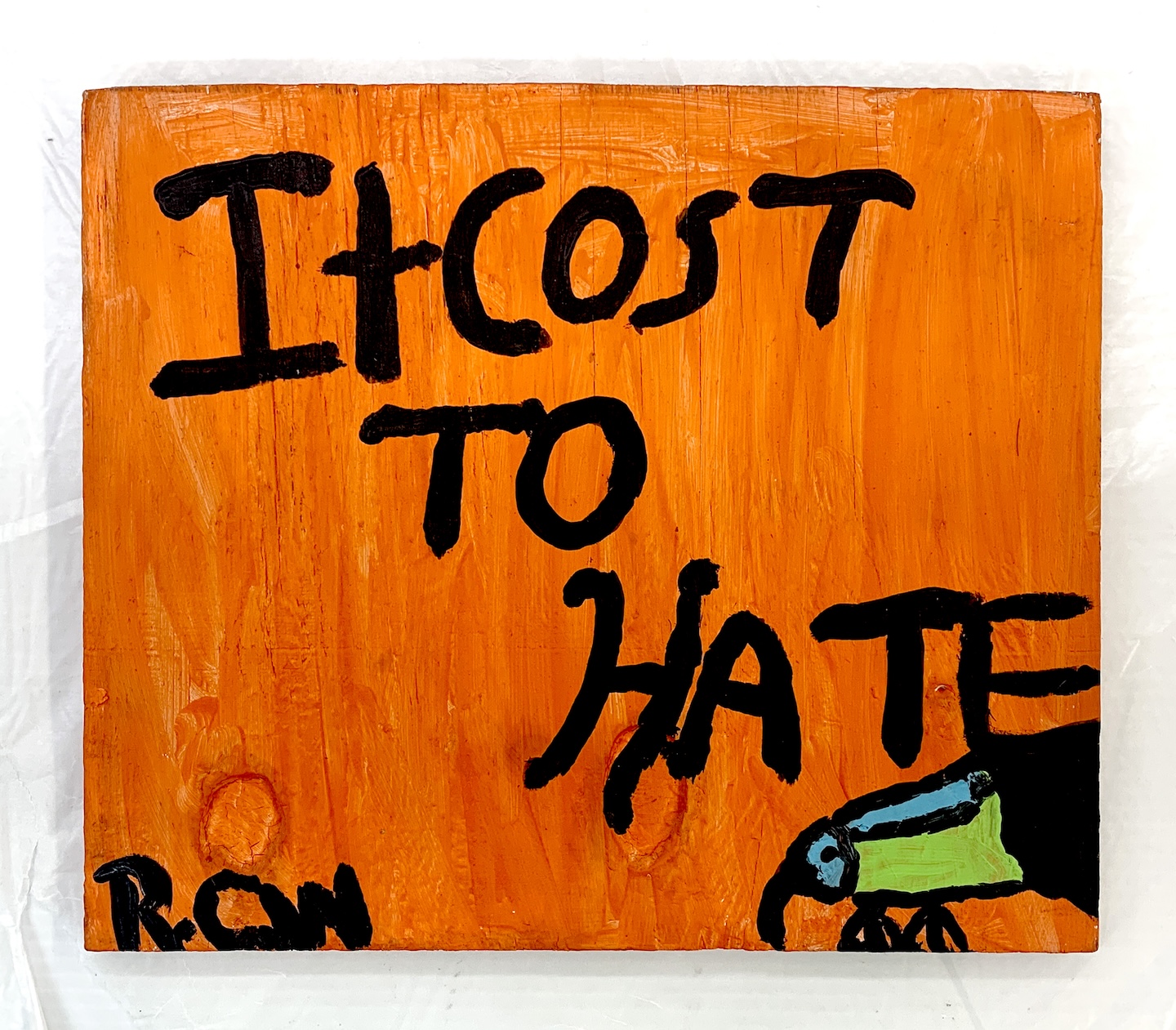
Ruby Williams (1928-2022), It Cost to Hate, 2016; paint on wood, 11 1/8 x 13 1/16 inches; Courtesy of CJ Williams Collection.
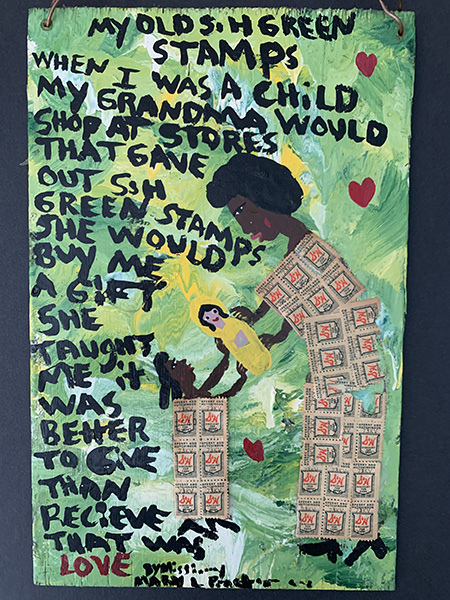
“Missionary” Mary Proctor (b. 1960), Grandma’s S&H Green Stamps, early 2000s; paint and S&H Green Stamps on metal, 12 x 7 3/4 inches; Courtesy of CJ Williams Collection.
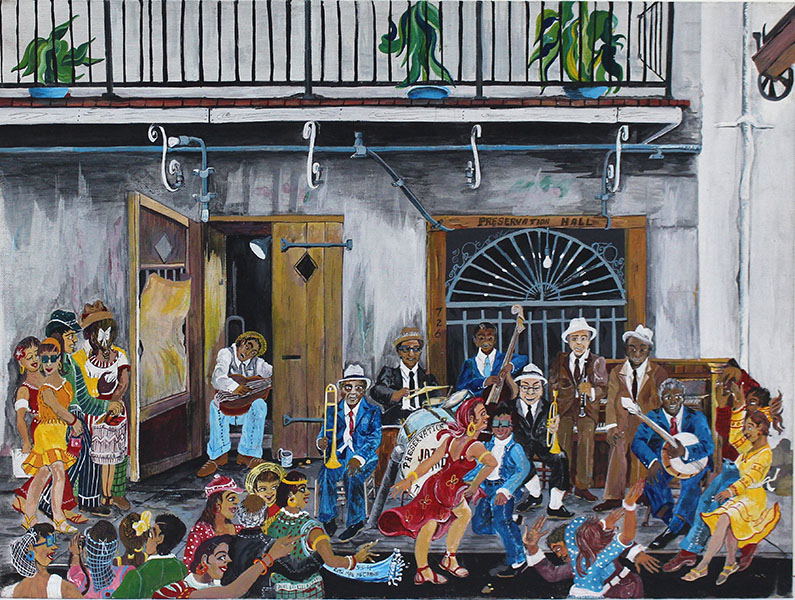
Dr. Ruth Mae McCrane (1929-2002), Preservation Hall: Street Scene, 1992; paint on canvas board, 17 3/8 x 23 3/8 inches; Courtesy of CJ Williams Collection.
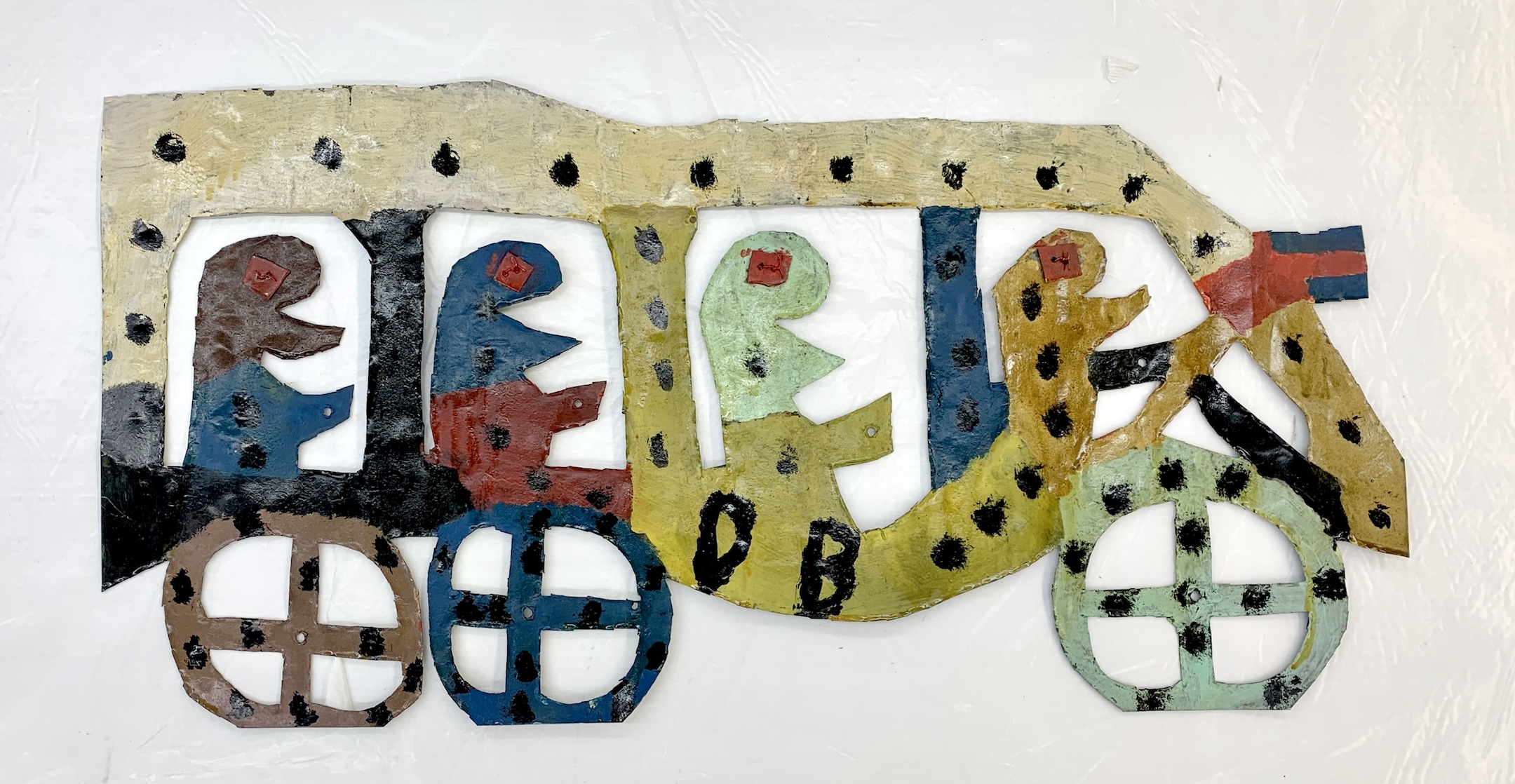
David Butler (1898-1997), Bus Ride, n.d.; cut and painted metal, 14 x 28 1/8 inches; Courtesy of CJ Williams Collection.
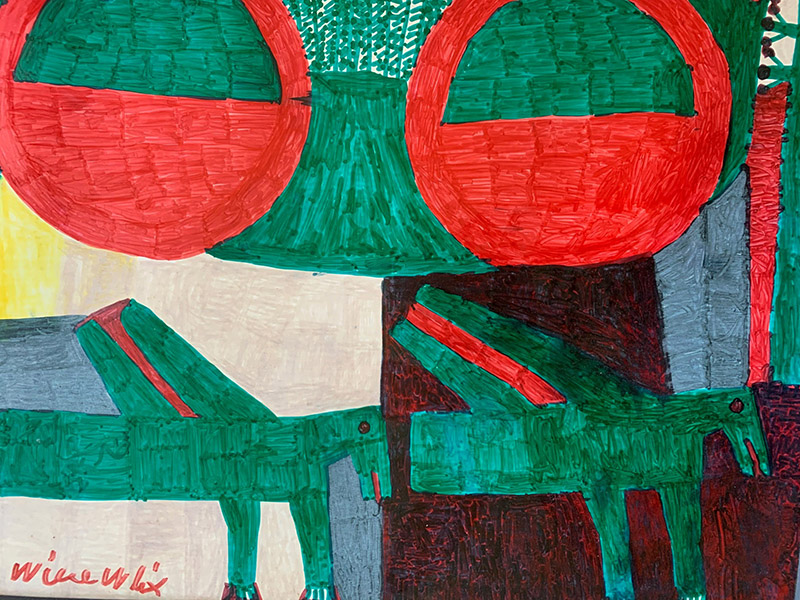
Willie White (1910-2000), Untitled, c. late 1980s / early 1990s; marker on poster board, 21 1/2 x 27 1/2 inches; Courtesy of CJ Williams Collection.
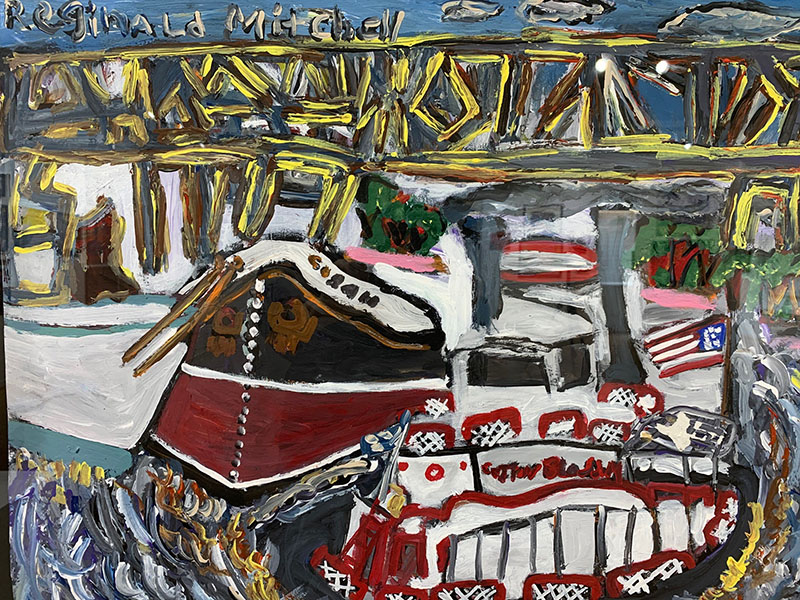
Reginald Mitchell (1950-2019), Mississippi River Boats, c. 2004; Paint on poster board, 21 7/8 x 28 inches; Courtesy of CJ Williams Collection.
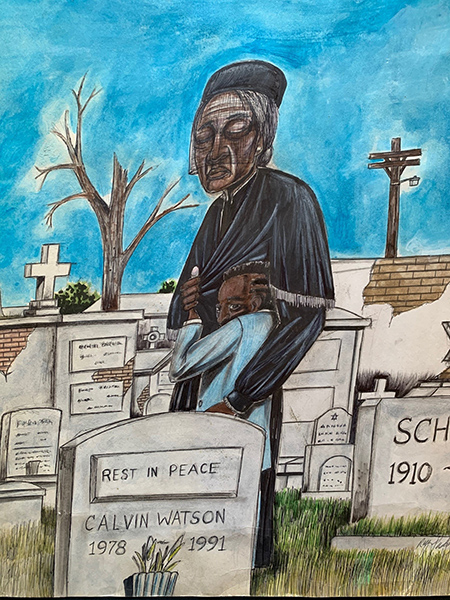
Roy Ferdinand (1959-2004), Fallen Idol, c. 1992; colored pencil, markers, and watercolor on poster board, 27 x 20 3/4 inches; Courtesy of CJ Williams Collection.
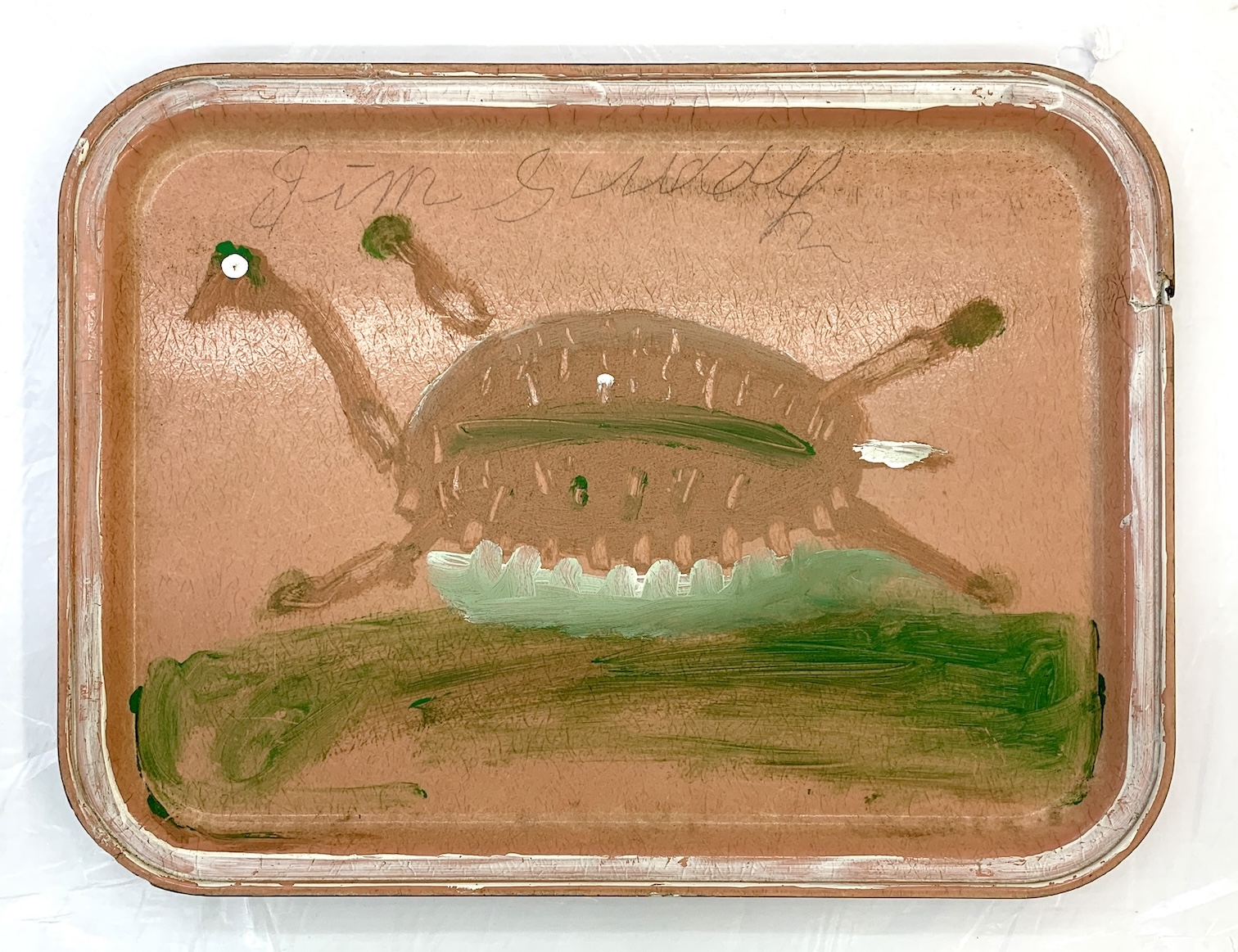
Jimmie Lee Sudduth (1910-2007), Turtle on Cafeteria Tray,ealy 1980s; house paint, berries, grasses, and mud on cafeteria tray, 14 13/16 x 19 3/4 inches; Courtesy of CJ Williams Collection.
Ransom “Rocky” McCormick (b. 1975), Moved by the Word, c. 2001; paint on paper, 30 x 44 inches; Courtesy of CJ Williams Collection.
Rooted Visions
At times, artists seem to create as if a force within is driving their messages regardless of access to formal training, traditional art materials, or patrons. Rooted Visions features works by 25 self-taught Southern Black artists who found ways to tell visionary stories in a world that often creates boundaries.
At times, artists seem to create as if a force within is driving their messages regardless of access to formal training, traditional art materials, or patrons. They “make-do” through use of found objects and ordinary materials, memory, and spirituality. Their art transcends the suppression and unimaginable hardships of the maker and envisions possibilities for a better, transformative world. Rooted Visions features work by twenty-five self-taught Southern Black artists who found ways to tell visionary stories through art in a world that often creates boundaries.
Hawkins Bolden (1914–2005), blind by the time he was eight years old, had an uncanny ability to create. Some of his works resemble minkisi, or medicine of the gods of the Kongo people. His assemblages were placed in his backyard in order to scare away birds from his tomato and okra plants.
Bessie Harvey (1929–1994) was a storyteller who dealt with spiritual and material well-being. Known mostly for her sculptures made from tree trunks, branches, and roots, she drew from her imagination, as is the case with the colorful image of a horned animal featured in this exhibition.
Raised by her grandmother after her mother gave birth to her at the age of eleven, Mary Proctor (b. 1960) memorializes the lessons she learned growing up, including collecting S&H Green Stamps. From the 1930s through the 1980s, S&H Green Stamps, which Proctor incorporates into her works of art, offered a popular way to purchase items that, for many, were otherwise unaffordable.
Jimmie Lee Sudduth (1910–2007) painted on any surface he could find. Using his fingers, which he referred to as “his brushes,” the artist worked with thirty-six different shades of mud, often using plywood as his canvas.
Known as one of the most important twentieth century folk painters, Mose Tolliver (c. 1920–2006) used house paint right out of the cans. He worked with four or five cans of paint at a time until they were empty. Tolliver discovered painting after his legs were crushed in a forklift accident as a young man. He eventually began painting and selling so many works that his yard and front porch functioned as an art gallery. His work has been exhibited worldwide.
Featuring the artwork from 1960 to 2016, Rooted Visions also includes work by notable artists such as Leroy Almon, Sr. (1938–1997), David Butler (1898–1997), Alyne Harris (b. 1942), Charlie Lucas (b. 1951), Mary T. Smith (1904–1994), and Luster Willis (1913–1990). These artists drew on their imaginative powers, allowing them to create a world that summons the divine and activates truths that are instructive. To understand these works is to witness their connection to the lived experience of their makers. From scarring comes agency; from cut tin comes protection; and S&H Green stamps provide a lesson in giving.
In these formidable statements, viewers will see the truth, power, and celebration of what it means to be Black in the American South. Additionally, the exhibition offers a fuller story of American art and advances conversations about who is represented in museums, as well as providing opportunities for community storytelling and creative recycling activities.
Organizer Bios:
Kristin Congdon is Professor Emerita of Philosophy and Humanities at the University of Central Florida. She has published extensively on art, folklore, and multicultural education. Her authored or co-authored books include The Making of an Artist:Desire, Courage, and Commitment;Happy Clouds, Happy Trees: The Bob Ross Phenomenon; American Folk Art: A Regional Reference; Just Above the Water: Florida Folk Art; and Uncle Monday and Other Florida Tales. Her latest book, Working Off the Past: Art Lessons and the 1920 Ocoee Massacre, will be published in the Spring of 2025. She has been president of the Florida Folklore Society, chair of the Florida Folklife Council, and senior editor of The Journal of Cultural Research in Art Education and Studies in Art Education. Dr. Congdon has been president of the Florida Folklore Society, chair of the Florida Folklife Council, and has served in numerous other leadership roles including the Director of the UCF Cultural Heritage Alliance. She has curated several shows at the Orlando Museum of Art, Crealde School of Art, and the Hannibal Square Heritage Center in Winter Park, FL.
Charley Williams is a Florida native and proprietor of a 250+ piece private collection of southern folk art, African and Haitian works of art: The CJ Williams Collection. Williams first started collecting in the late 1990s with a focus on Haitian art, which later expanded to interest in southern traditional folk art, including the Florida Highwaymen movement. Works from his collection have been incorporated into these recent exhibitions: Standing Strong in the Spirit: A Selection of Folk Art by Southern Women, 2015 (Mennello Museum of American Art, Orlando); Searching for Home, 2020 (Dalton Gallery, Agnes Scott College, Atlanta), Power, Myth and Memory: in Africana Art, 2020 (Jenkins Gallery and Heritage Center, Crealde School of Art, Winter Park, Fl.),Spinning Yarn: Storytelling Through Southern Art, 2017 (Jenkins Gallery, Crealde). He lives in Winter Park, FL.
Exhibition Details
38 artworks; 2 panels
- Press Kit
- Registrar’s Packet
- Programming Guide
- Gallery Guide
- Text Panels
- Narrative Labels
- Full Insurance
- Installation Instructions
- Custom-Designed and Built Crates
Kristin Congdon
Exhibits USA
Tour Schedule
Rooted Visions is touring November 2024 through October 2028. The dates below reflect seven-week exhibition periods. Dates are subject to change; please contact MoreArt@maaa.org or (800) 473-3872 x208/209 for current availability.
Supporting Assets
Factsheet
Ready to book?
Contact us to learn more about booking this exhibition for your venue.