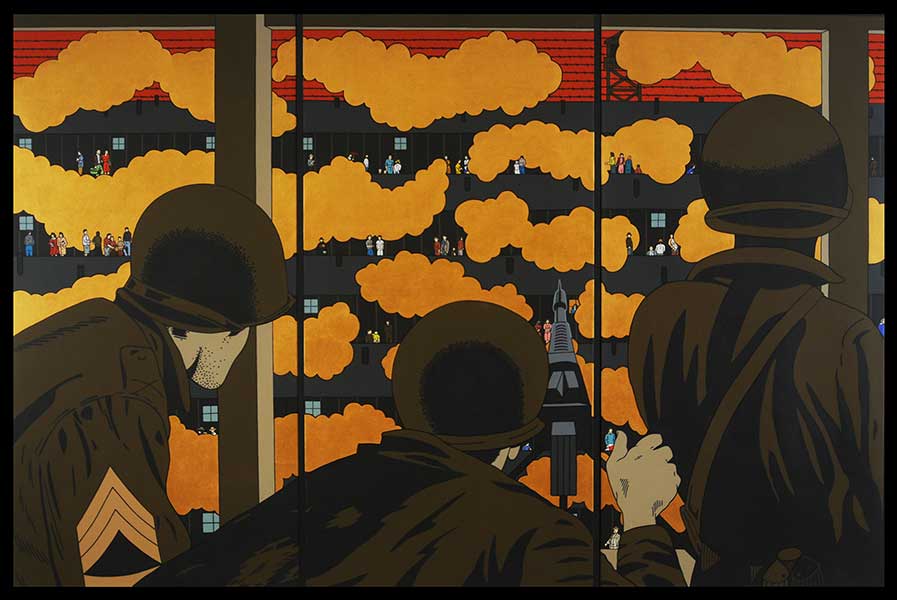
Roger Shimomura, American Infamy #6, 2015; acrylic paint on canvas, 72 x 108 x 2 inches; Courtesy of Greg Kucera Gallery.
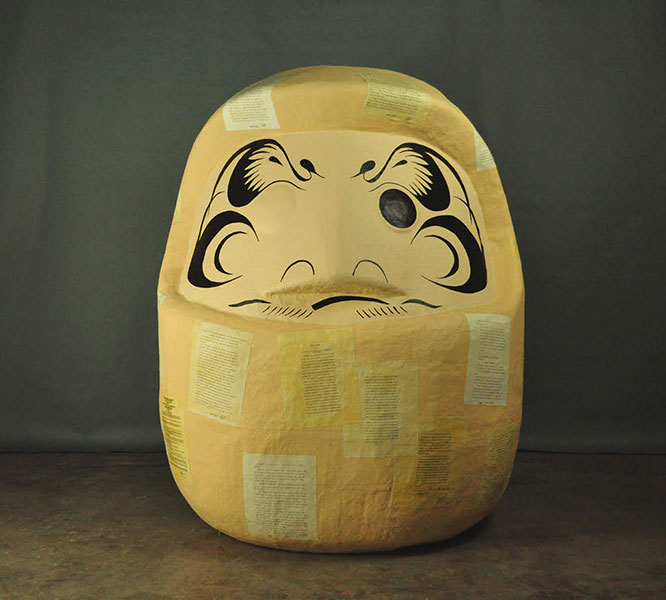
Kristine Aono, Daruma of Resilience,2019 – 2021; photocopied documents, paper sticky notes, paint, Aqua Resin, EPS foam, wood base, 60 x 48 x 45 inches (84 x 49 x 48 inches on exhibition pedestal, not pictured); Courtesy of the artist, photograph by Chris Barclay.
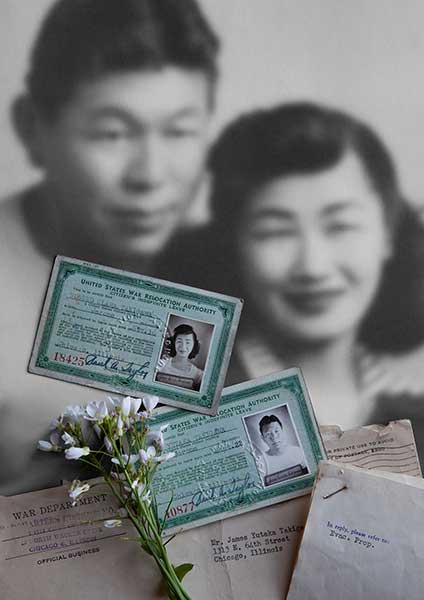
Jerry Takigawa, Citizen’s Indefinite Leave,2017; pigment print on Hahnemuhle Photo Rag, 22 x 17 inches; Courtesy of the artist.
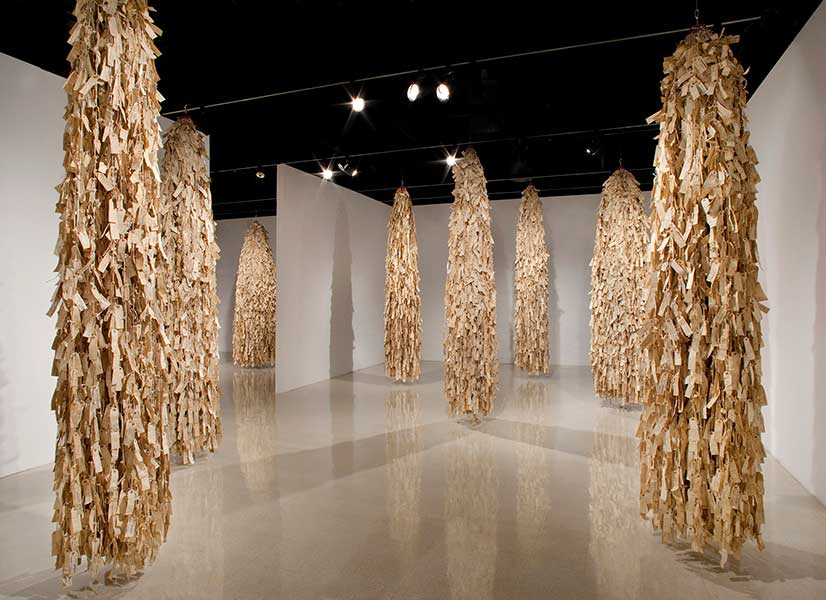
Wendy Maruyama, The Tag Project from the series Executive Order 9066,2011; paper, ink, string, thread, 120 x 24 x 24 inches per column; Courtesy of the artist.
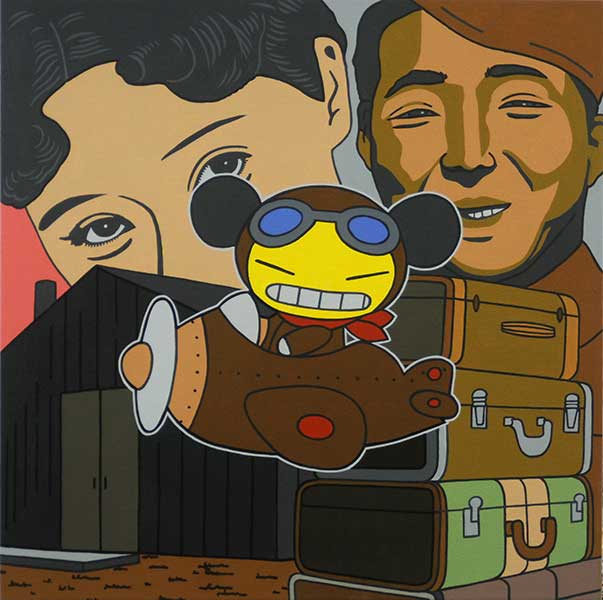
Roger Shimomura, The Enemy #2,2016; acrylic paint on canvas, 24 x 24 x 2 inches; Courtesy of the artist.
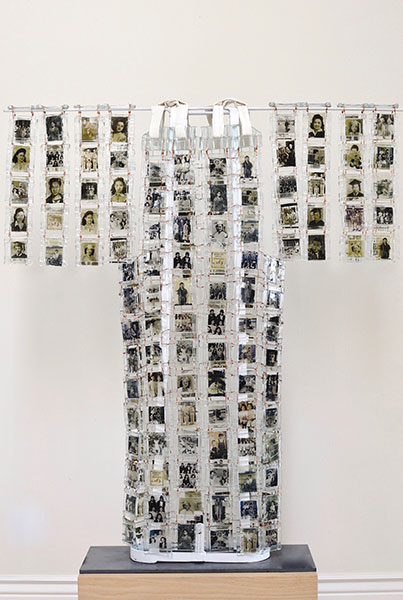
Reiko Fujii, Detained Alien Enemy Glass Kimono, 2009; glass, fused images, copper wire
48 x 42 x 6 inches; Courtesy of the artist
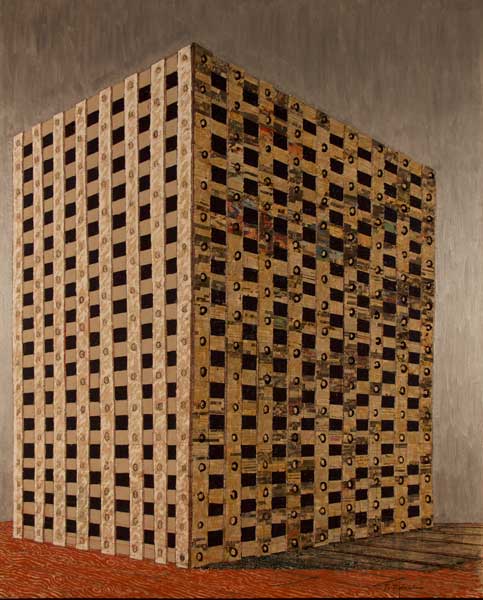
Tom Nakashima, Tule Lake / Manzanar Jail,2019; paint and mixed media on canvas, 84 x 72 inches; Courtesy of the artist.
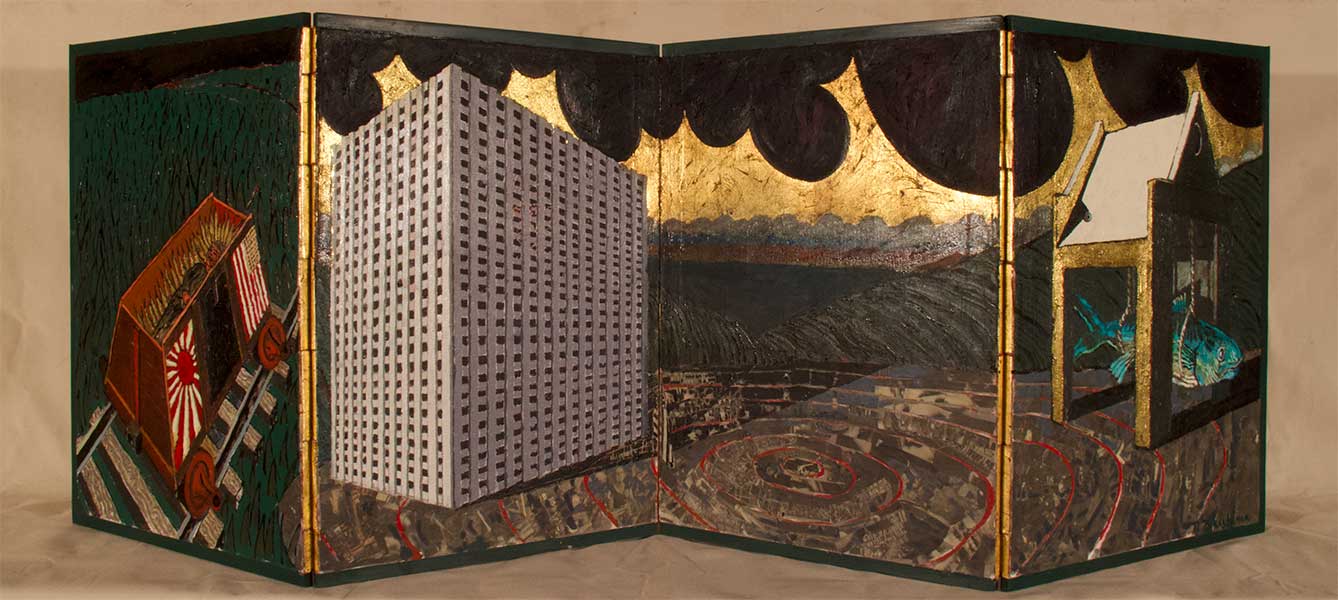
Tom Nakashima, Barrier Against the Wind (recto),2019; acrylic paint, newspaper collage, mixed media on Byôbu folding screen, 24 x 60 1/2 x 11 1/2 inches; Courtesy of the artist.
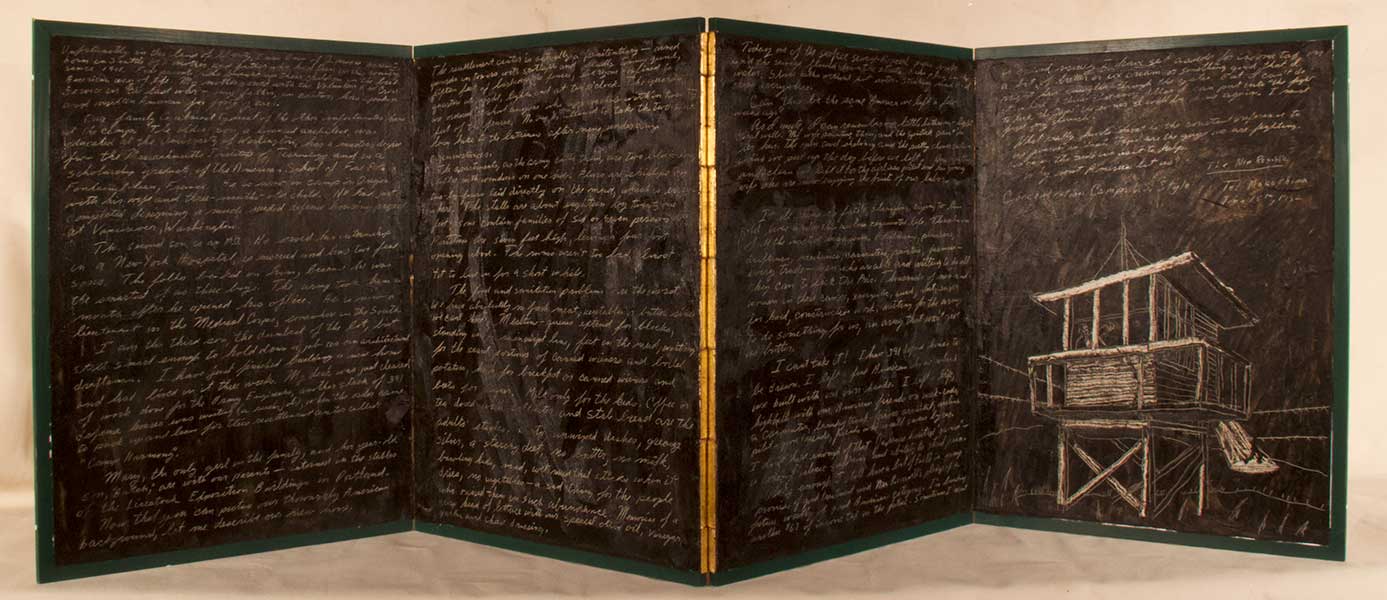
Tom Nakashima, Barrier Against the Wind (verso),2019; acrylic paint, newspaper collage, mixed media on Byôbu folding screen, 24 x 60 1/2 x 11 1/ inches; Courtesy of the artist.
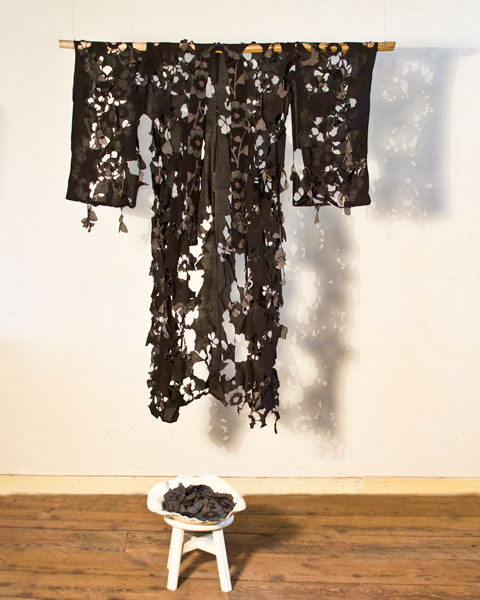
Judy Shintani, Deconstructed Kimono II,2011; vintage kimono, bamboo pole, ceramic vessel, stool, 46 x 76 x 10 inches; Courtesy of the artist.
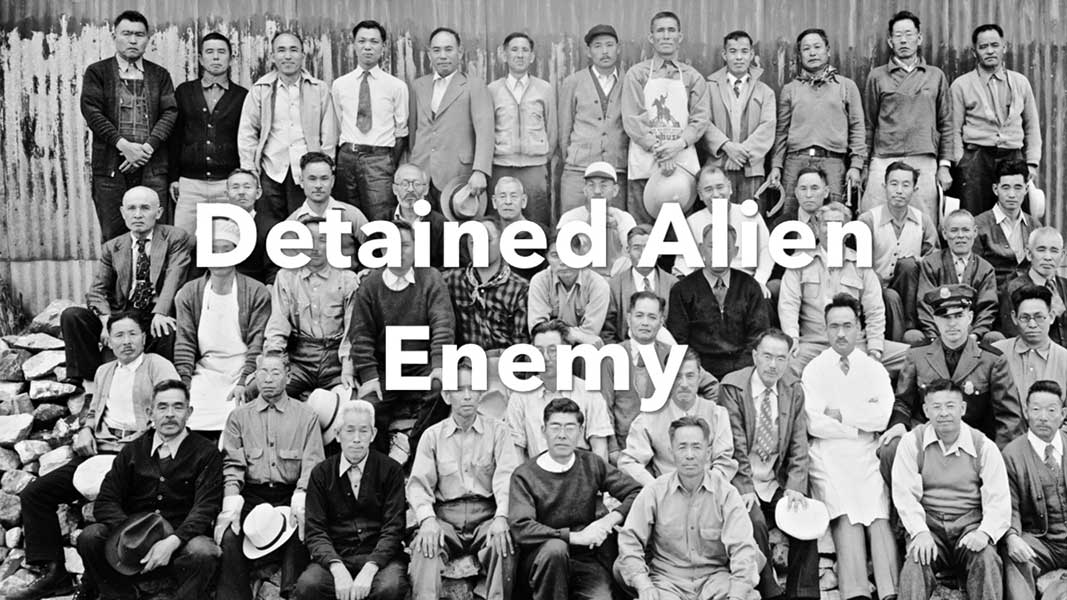
Reiko Fujii, Detained Alien Enemy Documentary,2017; video, duration 22 minutes; Courtesy of the artist.
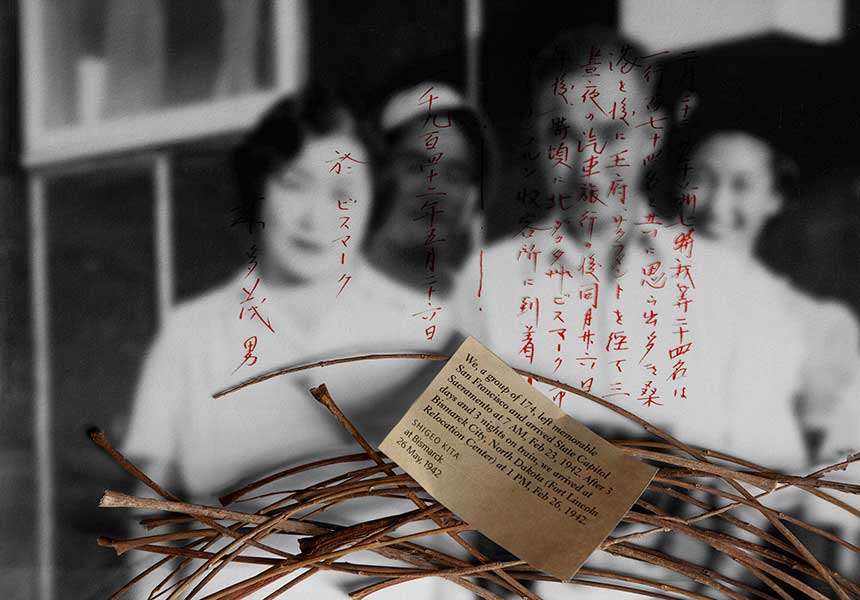
Jerry Takigawa, Traces of Misconduct,2019; pigment print on Hahnemuhle Photo Rag, 17 x 22 inches; Courtesy of the artist.
Roger Shimomura, American Infamy #6, 2015; acrylic paint on canvas, 72 x 108 x 2 inches; Courtesy of Greg Kucera Gallery.
Resilience—A Sansei Sense of Legacy
Told from the point of view of Sansei (third generation) Japanese Americans, Resilience—A Sansei Sense of Legacy is an exhibition of eight artists whose work reflects the effect of WWII-era Japanese concentration camps as it resonated from generation to generation.
In 1942, in response to the bombing of Pearl Harbor by Japanese forces, President Franklin D. Roosevelt signed into law Executive Order 9066. The law ordered the forced imprisonment of all Japanese Americans living on the west coast of the United States, which has the second largest population of Japanese people living outside of Japan.
Following the US’s deployment of EO9066, similar laws were enacted throughout Latin America as well. In the years following the order’s retraction at the end of WWII, expatriate Japanese families and individuals were forced to come to terms with lost property, the shame and indignation of incarceration, and the task of re-integration into a society that had expelled them. After their release from the incarceration camps that dotted the American West and Midwest during the war, Japanese Americans used the phrase Shikata ga nai—it cannot be helped—and the word gaman—to persevere and stay silent—to speak to their resilience against the losses they incurred at the behest of Roosevelt’s order.
Told from the point of view of Sansei (third generation) Japanese Americans, Resilience—A Sansei Sense of Legacy is an exhibition of eight artists whose work reflects on the effect of EO9066 as it resonated from generation to generation. While several of the artists in Resilience employ traditional Japanese methods in the construction of their work—Lydia Nakashima Degarrod’s use of boro stitching on her works on paper; Na Omi Judy Shintani’s kimono cutouts honored in ceramic vessels—others use iconography relating to Japanese culture as a jumping-off point for personal explorations on the subject of the incarceration camps—Reiko Fujii’s photographs-as-kimono; Wendy Maruyama’s columns of replicated camp ID tags. Each in their own way, the artists in this exhibition express moments of deeply felt pain and reluctant acceptance, emotions which were often withheld by their elders.
Exhibition artists are: Kristine Aono, Reiko Fujii, Wendy Maruyama, Lydia Nakashima Degarrod, Tom Nakashima, Roger Shimomura, Na Omi Judy Shintani, and Jerry Takigawa.
Co-curated by artist Jerry Takigawa and Gail Enns, Resilience was conceived to serve as a catalyst to cultivate social dialog and change around the issues of racism, hysteria and economic exploitation still alive in America today. The eight artists featured in Resilience were selected because of their personal connection to the subject matter, because their work is well respected within the Japanese American community as well as within the art world, and because of their activism on the subject of incarceration camps.
Takigawa and Enns explain, “The Sansei generation is perhaps the last generation of Japanese American artists that can be directly connected to the WWII American concentration camp experience—making their expression particularly significant in clarity of emotion. These artists lived through the years of “gaman” or silence about the camps. That silence made a deep impression on the artists selected for Resilience.”
Resilience—A Sansei Sense of Legacy also comes with a Spanish translation of the exhibition’s text, available with the Education Materials and Programming Guide.
About the Curators:
Gail Enns is the director of the nonprofit arts management organization Celadon Arts (founded 1998, Monterey, CA). Evidenced most recently by Resilience, Enn’s curatorial focus throughout her 30-year career has included the interaction between art, community, and some of the more challenging aspects of the human condition.
Jerry Takigawa is an independent photographer, designer, writer, and the co-founder of the annual PIE (Photography + Ideas + Experience) workshop series held at the Center for Photographic Art in Carmel-by-the-Sea, CA. A third generation Japanese American, Takigawa is a proponent of design as a tool for effecting radical shifts in human thought.
Exhibition Details
Twenty-six works of fine art by eight artists
- Press Kit
- Registrar’s Packet
- Programming Guide
- Gallery Guide
- Text Panels
- Narrative Labels
- Full Insurance
- Installation Instructions
- Custom-Designed and Built Crates
Gail Enns and Jerry Takigawa
Exhibits USA
Tour Schedule
Resilience—A Sansei Sense of Legacy will tour December 2021 through January 2027. The dates below reflect ten-week exhibition periods. Dates are subject to change; please contact MoreArt@maaa.org or (800) 473-3872 x208/209 for current availability.
Supporting Assets
Factsheet
Ready to book?
Contact us to learn more about booking this exhibition for your venue.